The first week your Temecula Valley home hits the market generates the highest buyer attention and showing activity. Homes priced correctly from day one sell faster and closer to list price. Miss that window and you'll likely chase the market down with price reductions.
Why does the first week of listing a home in Temecula Valley matter most?
The first week your home is on the market is when buyer attention is at its peak, and it's precisely why the first week of listing in Temecula Valley matters most. According to Realtor.com's Economic Research team, in a June 2026 report, the first two weeks of a listing generate the highest buyer attention nationally, and price reductions cluster around the four-week mark when a home hasn't moved. In Temecula Valley, where median days on market range from 16 days in Temecula to 55 days in Wildomar, how you enter the market determines whether you sell on your terms or spend the next two months cutting your price.
Key Takeaways
Recent local market data shows Temecula homes sell in a median of 16 days, while Wildomar sits at 55 days, the gap often comes down to how a home was priced and launched.
The median sale price across the Temecula Valley area is $751,000, based on trailing 90-day aggregated public listing data as of October 2026.
Buyer attention is highest in the first two weeks of a listing, according to Realtor.com's June 2026 research, after that, momentum drops and price reductions become the only lever.
Overpriced homes don't just sit longer; they typically sell for less than a correctly priced home would have on day one.
The launch sequence matters: photography, repairs, staging, and comparable-sale analysis should all be complete before the listing goes live, not after.
What makes the first week in Temecula Valley matters most for sellers?
Every seller I work with asks some version of the same question: "Can't we just start high and come down if we need to?" I get it. Your home is worth a lot to you, and leaving money on the table feels like a failure. But in this market, starting high is often what causes you to leave money on the table.
Here's the dynamic at play. When a home hits the MLS, it triggers alerts for every buyer and buyer's agent who has a saved search matching your criteria. That's your audience at its largest. It will never be bigger than it is on day one. By week two, the buyers who didn't schedule a showing have moved on to newer listings. By week four, your home has the stigma of sitting, and buyers start asking what's wrong with it.
The Realtor.com June 2026 report makes this plain: buyer attention is highest in the first two weeks, and price reductions peak around the four-week mark. That's not a coincidence. It's the market telling you the price was wrong from the start.
How does this play out differently across the Temecula Valley?
Not every community moves at the same pace. The table below shows trailing 90-day median data as of October 2026. These are area-level figures, your specific home's value depends on condition, street, build year, and timing, but the spread tells a real story.
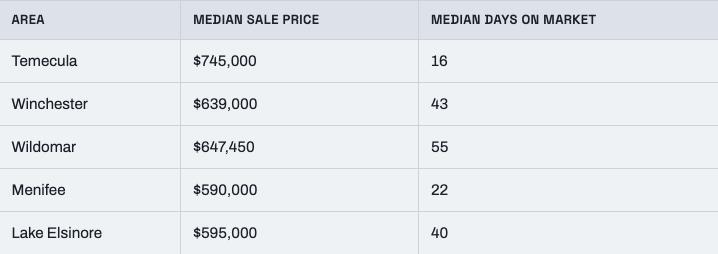
Temecula proper moves fast at a median 16 days. Menifee is close behind at 22. But Winchester, Wildomar, and Lake Elsinore are sitting at 40-plus days. In those communities, the margin for a pricing error in week one is smaller, not larger, because buyer pools are shallower and the cost of a stale listing is steeper.
With 513 active listings across the area and 164 new listings hitting the market in just the last 30 days, buyers have options. A home that isn't priced to compete in its specific submarket gets skipped, not negotiated on.
How should you prepare before your Temecula Valley listing goes live?
This is where I spend the most time with sellers before we ever hit the button. The first week of a listing is a performance, and you don't get a rehearsal. Everything that can be done before launch should be done before launch, because once you're live, the clock is running and the reason Temecula Valley matters most to your bottom line is that the window is short.
The pre-launch checklist that actually matters
Comparable-sale analysis, finalized. Not a Zestimate. Not what your neighbor got two years ago. A real side-by-side of what has closed in your submarket in the last 60-90 days, adjusted for condition and features. This is the foundation of your price. I walk through Pricing Your Home to Sell in Temecula Valley in more depth if you want the full framework.
Photography, done right. Buyers form an opinion in seconds from a listing photo. Professional photography, wide-angle, well-lit, shot after the home is staged and cleaned, is not optional in a market where buyers are scrolling 50 listings before they schedule a single showing.
Repairs and staging, complete. Not in progress. Done. A buyer walking through a home with half-painted walls or a broken gate is already mentally discounting your price. Is Staging Worth It in Temecula Valley? covers whether the investment pencils out for your situation.
Disclosures, prepared in advance. Having your seller disclosures ready before offers come in speeds up the transaction and signals to buyers that you're a serious, organized seller.
Launch timing, intentional. Listings that go live mid-week, with full marketing in place, tend to accumulate showing requests before the weekend, when most buyers are available to tour. Going live on a Friday afternoon with no photos ready wastes your best days.
If you're earlier in the process and still figuring out when to start all of this, When to Start Preparing Your Temecula Home to Sell gives you a realistic timeline from first conversation to active listing.
What to watch in days 1 through 7
Once you're live, the first week is a feedback loop. Here's what I track with every seller I represent:
Showing volume. How many showings have you had in the first 72 hours? In a market like Temecula proper, a correctly priced home in good condition should be generating serious interest in the first few days. Silence is data.
Buyer feedback. Are agents saying the home shows well but the price is too high? That's a clear signal. Are they saying nothing at all? That means buyers aren't even bothering to schedule.
Online engagement. Views and saves on listing portals tell you whether your marketing is reaching buyers. Low engagement in the first week often points to a pricing or photography problem, not a buyer-demand problem.
Your specific numbers will depend on your home's condition, location within the valley, and what's competing with you right now. That's exactly the kind of real-time read I provide to every seller I work with.
What happens if your Temecula home doesn't get offers in the first week?
Act quickly, and act decisively. A small price reduction two weeks in is almost always more effective than a larger one at six weeks. By the time a listing has been sitting for 45 or 60 days, buyers are offering well below the reduced price anyway, they assume you're desperate, and the negotiating leverage has shifted entirely to their side.
The worst outcome isn't a price reduction. It's a price reduction that comes too late, after the home has accumulated days on market that buyers can see. In California, days on market is visible to buyers and their agents. A listing with 70 days on market and two price cuts tells a story, and it's not one that helps you.
I tell sellers the same thing before every listing: pricing it right the first week isn't about being conservative. It's about making the market work for you instead of against you. A well-priced home in the Temecula Valley can generate multiple offers. An overpriced one generates silence, then stigma, then a lower final sale price than you would have gotten if you'd priced it correctly on day one.
The only way to know your right number is to run a real analysis against what's actually closing in your specific submarket right now. That's a conversation worth having before you list, not after.
Frequently Asked Questions
Why is the first week of listing my Temecula home so important?
The first week is when your listing reaches the largest pool of active buyers. According to Realtor.com's June 2026 research, buyer attention is highest in the first two weeks, and price reductions cluster at the four-week mark when homes haven't moved. After that initial window, momentum drops and buyers begin to question why the home is still available.
What happens if my Temecula home is overpriced when it first hits the market?
An overpriced listing generates low showing volume, weak offers (or none), and accumulates days on market that buyers and their agents can see. By the time you reduce the price, the home has a stigma that forces you to price even lower than you would have needed to on day one. The practical result is a longer time on market and a lower final sale price.
How quickly should I lower the price if my Temecula home gets no offers?
If you've had minimal showings and no offers in the first 7-10 days, that's a signal worth acting on within the first two weeks rather than waiting. A timely, meaningful reduction resets buyer interest while your listing still has momentum. Waiting until week five or six usually means a larger cut and a weaker negotiating position.
Should I price below market value to create a bidding war in Temecula?
Intentionally underpricing to generate multiple offers can work in a fast-moving submarket with low inventory, but it carries real risk if buyer demand is softer than expected, you may simply sell for less than you needed to. The better approach is pricing at or just below the top of a defensible comparable-sale range, which attracts serious buyers without gambling on a bidding war that may not materialize. Your specific submarket conditions matter here.
Is the best listing price based on recent sales, active competition, or both?
Both. Recent closed sales tell you what buyers have actually paid for comparable homes; active listings tell you what you're competing against right now. In Temecula Valley, where conditions vary meaningfully by community, the most accurate price comes from a side-by-side analysis of both, weighted toward closings from the last 60-90 days in your specific area.
Does relisting after a price reduction reset the home's days on market in California?
Relisting can reset the days-on-market counter in the MLS, but experienced buyers and their agents know how to check the listing history. A fresh MLS number doesn't erase the record of prior activity, and agents routinely pull that history before advising their clients. It's not a reliable strategy for hiding a stale listing.
If you're ready to talk through what a well-executed launch looks like for your specific home and community, I'm happy to run the numbers with you before you make any decisions. Schedule a consultation here and we'll start with a real market analysis, not a guess.
About Andrew Lewis
Andrew Lewis is a top-producing REALTOR® and founder of Performance Real Estate, serving the Temecula Valley and greater Riverside County. Licensed since 2012, he has closed over 500 transactions totaling more than $200 million in sales, specializing in luxury homes, listings, new construction, relocation, and investor-focused real estate.
Real Broker · (951) 237-0292
This article is general information only and does not constitute legal, tax, or financial advice. Confirm your specific costs and transaction details with your closing agent, tax advisor, or lender. Equal Housing Opportunity. Andrew Lewis, CA DRE, Performance Real Estate DRE 01914085 / 02022092, Real Broker. Licensed by the California Department of Real Estate.