By Andrew Lewis
Most Temecula Valley sellers should start preparing 60 to 90 days before their target list date. That window covers California disclosure paperwork, repairs, decluttering, staging, and professional photography, all of which need to be done before the home hits the MLS.
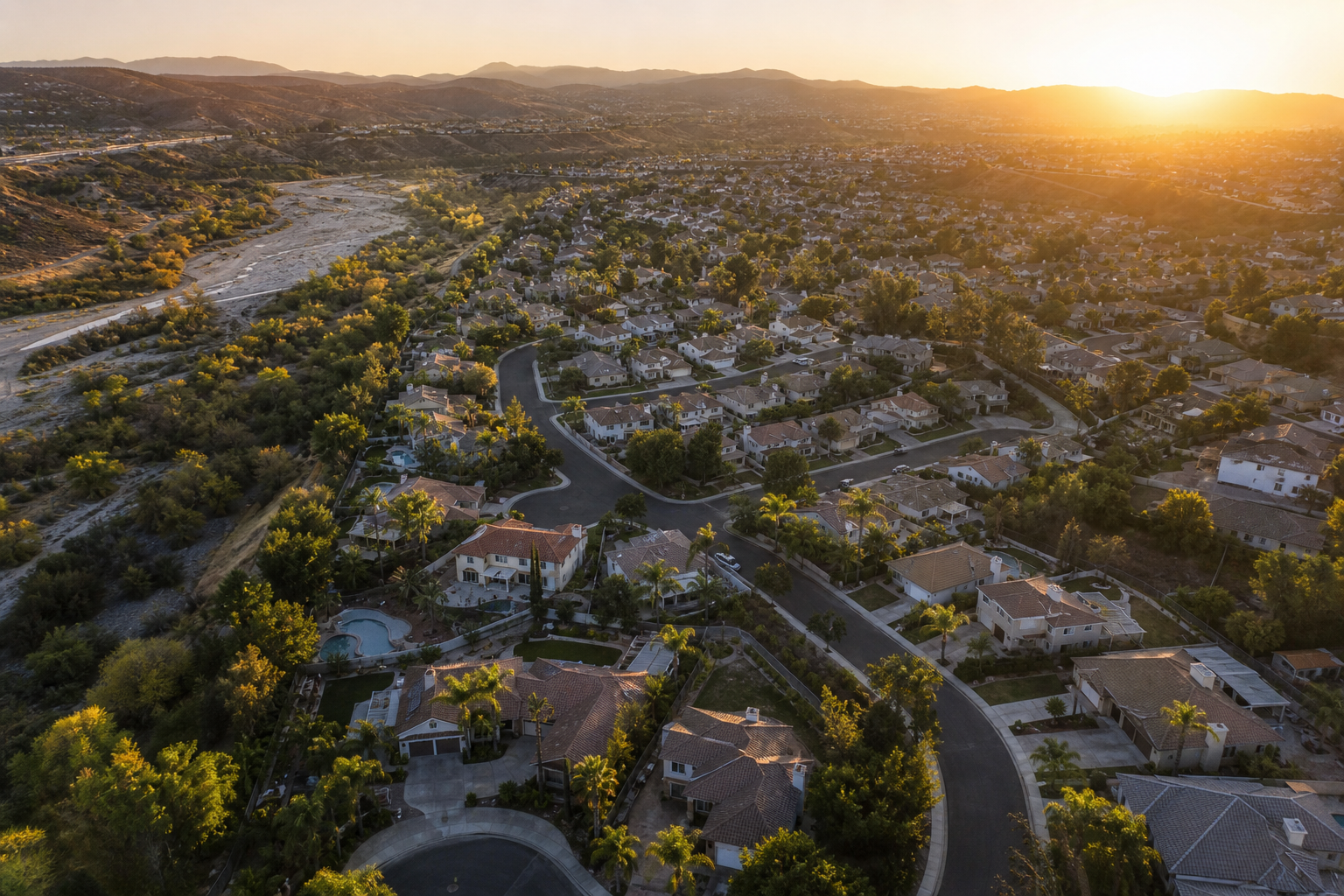
When should I start preparing my house to sell in Temecula Valley?
Most Temecula Valley sellers should begin the prep process 60 to 90 days before their target list date. That window gives you enough time to complete California's required disclosure paperwork, finish repairs, declutter, stage, and schedule professional photography, all before the home goes live on the MLS, which is where most buyers will first encounter it.
Here's the thing most sellers don't realize: the prep work that actually moves the needle, disclosures, repairs, staging, photos, has to be done before day one on the market, not after. If you're thinking about listing in the spring or early-summer window, that means starting your checklist in late winter. If you're targeting a fall list date, late summer is your starting gun.
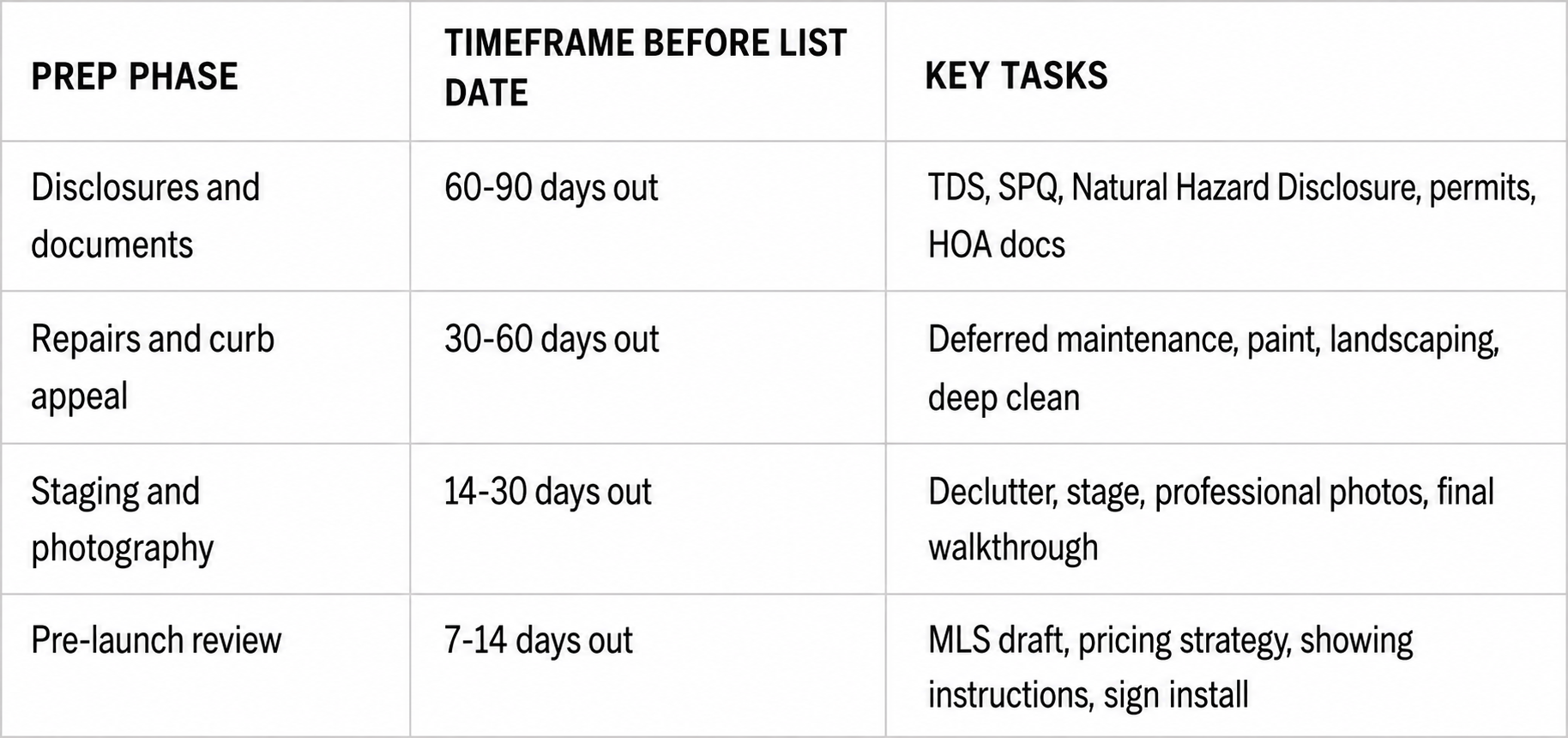
Getting clarity and a game plan up front makes the whole transaction less stressful. I walk my clients through a reverse-engineered timeline from their target list date so nothing gets rushed at the end. Here's how that timeline typically breaks down.
The 60-to-90-Day Seller Prep Timeline
Days 60-90 out: disclosures, documents, and big decisions
This is the phase most sellers skip, and it's the one that causes the most last-minute scramble. California residential sellers of one-to-four unit properties are required to complete a Transfer Disclosure Statement (TDS) and a Seller Property Questionnaire (SPQ) before closing. The California Department of Real Estate treats these as core pre-market obligations, not afterthoughts. The sooner you start gathering the information to fill them out accurately, the better.
You'll also need to determine whether your property falls within a mapped hazard zone. California sellers are generally required to provide a Natural Hazard Disclosure if the property is in a designated wildfire, flood, earthquake, or other hazard area. In Temecula Valley, wildfire and flood zone status are real considerations depending on where your home sits. I always recommend pulling that information early because it can affect what else you need to prepare.
This is also the time to dig up:
Permits for any additions, room conversions, or major improvements
HOA documents if your community requires them (some HOA management companies in the valley take two to four weeks to process document requests)
Repair records, warranties, and appliance manuals
Any prior inspection reports you have on file
If your property has a septic system, a private road, or any unpermitted improvements, add extra lead time here. Those items can affect your disclosure obligations and your buyer's financing, and you want to know about them before a buyer's inspector does.
Days 30-60 out: repairs, painting, and curb appeal
Once your documents are in order, shift focus to the physical condition of the home. The goal isn't a full renovation, it's removing the objections that give buyers a reason to negotiate down or walk away.
In my experience working with sellers across Murrieta, Temecula, and Wildomar, the repairs that matter most are the ones that show up on an inspection report: HVAC service, water heater age, roof condition, and anything visible like cracked drywall, stained ceilings, or broken fixtures. Buyers in a competitive California market are sophisticated. They're going to hire an inspector, and a long punch list after an accepted offer is exactly how deals fall apart.
Practical items to tackle in this window:
Interior and exterior paint touch-ups (or full repaint if needed)
Landscaping cleanup, fresh mulch, and irrigation checks
Deep cleaning, including windows, grout, and garage floors
Any deferred maintenance you've been putting off
Garage door, exterior lighting, and front-door hardware
According to the National Association of REALTORS®, buyers form strong first impressions within seconds of seeing a home online. That means your photos need to show a home that's already finished, not one that's still mid-project.
Days 14-30 out: staging, decluttering, and photography
This is the phase that directly drives your list price strategy. Staging and professional photography aren't cosmetic extras, they're how you compete in a market where buyers scroll through dozens of listings before scheduling a single showing.
Decluttering takes longer than most sellers expect. Plan at least a week to sort, donate, store, or remove personal items, oversized furniture, and anything that makes rooms feel smaller than they are. If you're using a professional stager, they'll typically need access to the home after it's been cleared out.
Photography should be scheduled only after all repairs, painting, and staging are complete. In the Temecula Valley, listing photos are the first showing, most buyers in the area are searching online through platforms that index MLS data, and a home with strong photos generates more showings in the first week than one that goes live before it's ready.
Pricing a listing right the first week beats chasing the market down. That's not just a preference, it's math. Recent Zillow market data shows the median days on market in Temecula is 29 days, with a median sale price of $770,000. Homes that launch with accurate pricing and strong presentation capture the most buyer attention during that critical first week. Homes that sit and then reduce lose negotiating leverage.
What the Temecula Market Looks Like Right Now
As of August 2026, recent Zillow market data shows 512 active listings across the Temecula area, with 189 new listings added in the past 30 days and 398 homes sold over the trailing 90 days. That's an active but competitive market. Sellers who show up prepared, complete disclosures, finished repairs, strong photos, have a clear advantage over those who rush to list before they're ready.
The spring and early-summer window (roughly March through June) has historically been when buyer activity peaks in California markets, according to NAR seasonal market data. If you're targeting that window next year, a 90-day prep timeline means starting your checklist in December or January. For sellers targeting a fall or winter list date, the same logic applies, back-calculate from your target date and start earlier than feels necessary.
Your specific timeline will depend on your home's condition, whether you have HOA or disclosure complications, and what the market is doing when you're ready to go. That's exactly the kind of question I walk my clients through before we even list, every situation is different, and the only way to know for sure is to run through it with someone who knows this market.
If you're considering selling and want to understand what your home might be worth in today's market, the Temecula Valley has nuances that a generic online estimate won't capture. And if you're weighing whether to sell and stay local or make a bigger move, the Living in Murrieta guide covers what daily life actually looks like across the valley's communities.
Frequently Asked Questions
How far ahead should I start preparing my house to sell in Temecula?
Plan on 60 to 90 days before your target list date for a typical Temecula Valley home. Homes with HOA document requirements, unpermitted improvements, septic systems, or significant deferred maintenance may need more lead time. Starting earlier almost never hurts, rushing almost always does.
What repairs should I do before listing my Temecula home?
Focus on items that are likely to show up on a buyer's inspection report: HVAC service, water heater condition, roof, and any visible deferred maintenance like cracked drywall, stained ceilings, or broken fixtures. Cosmetic updates, fresh paint, landscaping, and hardware, also matter because buyers in this market are comparing your home to professionally presented competing listings. Your specific repair list depends on your home's age, condition, and price point.
What disclosures do California sellers need before listing?
California sellers of residential one-to-four unit properties are generally required to provide a Transfer Disclosure Statement (TDS) and a Seller Property Questionnaire (SPQ), among other documents. If your property is in a mapped hazard zone, a Natural Hazard Disclosure is also required. The California Department of Real Estate and the California Association of REALTORS® are the authoritative sources on what's required, your agent can walk you through the full package for your specific property.
When should I schedule listing photos for a Temecula Valley home?
Schedule photography only after all repairs, painting, staging, and decluttering are complete. Photos should be the last step before going live on the MLS, not a work-in-progress snapshot. In Temecula Valley, buyers typically encounter your home online first, so the photos need to show the finished product. Most photographers need two to five business days' notice, so plan accordingly within your final two weeks before launch.
Is spring the best time to list a home in Temecula Valley?
Spring and early summer (roughly March through June) tend to see higher buyer activity in California markets, and Temecula Valley generally follows that pattern. That said, seasonality varies by year and by neighborhood, and a well-prepared home in any month will outperform a rushed listing during peak season. The best time to list is when your home is genuinely ready and the pricing strategy is solid.
Do I need a termite inspection before selling in Riverside County?
A termite inspection isn't automatically required by California law for every sale, but it's commonly requested by buyers and sometimes required by certain loan types. Whether you order one proactively before listing or wait for a buyer to request it is a strategic decision that depends on your home's age, construction type, and local market norms. I can walk you through the tradeoffs for your specific situation before you list.
The bottom line: sellers who start early and work through prep in the right order, disclosures first, then repairs, then presentation, have a smoother transaction and stronger negotiating position. Rushing any of those phases costs you time or money, and usually both.
If you're thinking about selling in Temecula Valley and want a personalized prep timeline and market analysis, I'd be glad to walk through it with you. Schedule a consultation and we'll build a plan around your home, your timeline, and today's market.
About Andrew Lewis
Andrew Lewis is a top-producing REALTOR® and founder of Performance Real Estate serving the Temecula Valley and greater Riverside County. Licensed since 2012, he has closed over 500 transactions totaling more than $200 million in sales, specializing in luxury homes, listings, new construction, relocation, and investor-focused real estate.
Real Broker · (951) 237-0292
Equal Housing Opportunity. Andrew Lewis, CA DRE, Performance Real Estate DRE 01914085 / 02022092, licensed by the California Department of Real Estate. This article is general information only and is not legal, tax, or financial advice. Confirm your specific costs, disclosures, and transaction details with your attorney, tax advisor, lender, or escrow officer.