After accepting an offer in Temecula Valley, escrow opens within 1-3 days, inspections and appraisal happen in the first two weeks, disclosures are delivered, contingencies are removed, and the grant deed records with the Riverside County Recorder at closing, typically 30 days from acceptance.

What happens after you accept an offer on your Temecula Valley home?
After you accept an offer in Temecula Valley, escrow opens within one to three days, the buyer orders inspections and the lender orders an appraisal during the first two weeks, California-required disclosures are delivered, contingencies are removed, and the transaction closes when the grant deed records with the Riverside County Recorder. The full process typically runs 30 days, though 21 to 45 days is common depending on loan type and how smoothly each phase goes.
Key Takeaways
Recent local market data shows Temecula homes sell at a median of $752,495 with a median of 22 days on market, meaning escrow is often the longest phase of the entire transaction.
Escrow in Temecula Valley typically runs 30 days, with 21 to 45 days common depending on the buyer's loan type.
California law requires sellers to deliver the Real Estate Transfer Disclosure Statement, Natural Hazard Disclosure report, and agency disclosure forms under California Civil Code § 2079, these are legal requirements, not optional courtesies.
Incomplete disclosures and appraisal gaps are the two most common reasons deals stall or fall apart in Riverside County transactions.
The sale is not final until the grant deed records with the Riverside County Recorder, that recording is the moment you officially stop owning the home.
What happens in the first two weeks of escrow?
The first thing that happens after you sign the accepted offer is escrow opens. Your closing agent, typically a local escrow company here in Riverside County, receives the signed contract, collects the buyer's earnest money deposit, and begins coordinating the transaction. This usually happens within one to three days of acceptance.
Once escrow is open, the buyer has the right to investigate the property. That means scheduling a general home inspection, and potentially a pest inspection, roof inspection, HVAC inspection, or pool inspection depending on your home's features. These typically happen in the first one to two weeks of escrow, and this is the phase where sellers feel the most exposed.
At the same time, the buyer's lender orders the appraisal. The appraiser is an independent third party assigned by the lender, neither you nor the buyer chooses them. The appraisal is what the lender uses to confirm the home's value supports the loan amount. In a competitive market like Temecula, where an April 2026 analysis by TemeculaNow reported a 100.1% sale-to-list ratio, appraisals usually come in at or near the contract price, but not always.
Your job as the seller during this window is to keep the home accessible, respond to disclosure requests promptly, and stay in close contact with your agent. Delays here have a way of compressing everything downstream.
Disclosures: what California law requires you to deliver
California sellers of one-to-four-unit residential properties are required by law to deliver specific disclosures to the buyer. This is not optional. Under California Civil Code § 2079 and related statutes, you must provide:
Real Estate Transfer Disclosure Statement (TDS), your written disclosure of the property's known condition
Natural Hazard Disclosure (NHD) report, identifies whether the property is in a fire hazard zone, flood zone, earthquake fault zone, or other designated area
Agency disclosure forms, clarifies the representation relationships in the transaction
I always recommend getting these completed before the home even goes on the market. When disclosures land late in escrow, buyers get nervous, ask for extensions, or start renegotiating. The sellers I work with who have everything ready on day one move through escrow with far less friction.
If your property has an HOA, there are additional HOA disclosure documents the buyer is entitled to review, and that review period is another potential source of delay if the documents aren't ordered early.
The appraisal gap: what to do if it comes in low
A low appraisal is one of the most stressful moments in any transaction. If the appraised value comes in below the contract price, the buyer's lender will only finance based on the appraised value. That leaves a gap the buyer has to cover out of pocket, or that has to be negotiated.
As the seller, your options typically include: reducing the price to the appraised value, splitting the difference with the buyer, holding firm if you believe the appraisal is wrong (and requesting a reconsideration of value), or accepting that the deal may not close. What makes sense depends on your situation, how strong your other offers were, and how much time you've already invested in escrow. This is exactly the kind of moment where having an experienced agent in your corner matters, your agent can pull comparable sales, make the case to the appraiser's management, and help you decide whether to negotiate or move on.
How do contingencies work, and when are they removed?
A standard California Residential Purchase Agreement includes three primary contingencies: the inspection contingency, the appraisal contingency, and the loan contingency. Each one gives the buyer a defined window to complete their due diligence, and the right to cancel and recover their deposit if something doesn't check out.
The inspection contingency typically runs through roughly the first 17 days of escrow, though the exact timeline is negotiated in the contract. During this window, the buyer can request repairs, ask for a price reduction, or cancel. After the window closes and the buyer signs a contingency removal, they are committed.
The appraisal and loan contingencies typically follow a similar timeline, with the loan contingency often running a few days longer to give the lender time to issue final approval. Once all three contingencies are removed in writing, the buyer's earnest money deposit is generally at risk if they walk away without cause.
According to NAR research, financing issues and appraisal problems are consistently among the top reasons contracts fall through nationally, and that holds true here in Temecula Valley as well. The good news is that most of these issues are manageable when they're caught early and handled directly.
Here is a look at how median sale prices and days on market compare across the communities I work in, based on recent aggregated public listing data for the trailing 90 days as of September 2026:
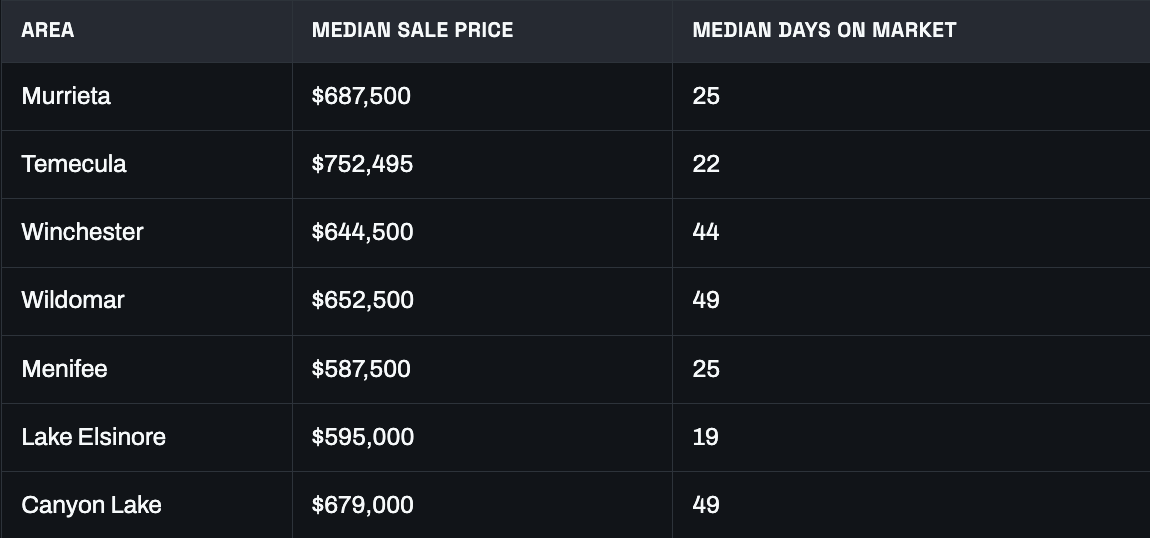
Notice that Winchester, Wildomar, and Canyon Lake sit at 44 to 49 median days on market, nearly double Temecula's 22. Longer market times in those areas can mean buyers negotiate harder on contingency timelines, so knowing what's normal in your specific community matters when you're evaluating an offer's terms.
What happens at closing, and when do you officially stop owning the home?
Once contingencies are removed and the buyer's lender issues final loan approval, the closing agent prepares the final settlement documents. You'll sign your seller-side closing documents, often a day or two before the buyer's signing, depending on how escrow is structured.
On the agreed close date, the buyer's loan funds are wired to escrow, the closing agent disburses proceeds, and the grant deed is recorded with the Riverside County Recorder. That recording is the legal moment the property transfers ownership. You officially stop owning the home the moment that deed records, not when you sign, not when funds are wired, but when the Recorder confirms it.
Possession transfers per the terms of your contract. Most Temecula Valley contracts call for possession at close of escrow, but a seller rent-back arrangement, where you stay in the home for a few days or weeks after closing, can be negotiated if you need extra time to move. The California Association of REALTORS® provides standard forms for seller possession after close that spell out those terms clearly.
The full seller timeline from a well-prepared listing to closed escrow looks roughly like this, as outlined in our 2026 Temecula Valley seller guide:
Days 0–3: Escrow opens, earnest money deposited, disclosures delivered
Days 3–10: Inspections scheduled and completed, appraisal ordered
Days 0–17: Inspection contingency period, buyer reviews disclosures and investigates
Days 17–25: Appraisal completed, loan moving through underwriting, contingencies removed
Days 25–30: Final loan approval, closing documents prepared, signings scheduled
Day 30 (close): Funds wire, grant deed records with Riverside County Recorder, possession transfers
That 30-day window moves fast. The sellers who close on time are the ones who stay responsive, have their disclosures ready, and work with an agent who's actively managing each phase. If you want a sense of what your net proceeds will look like before you get to closing, I break down how to think about your net from a Temecula Valley sale here.
The Consumer Financial Protection Bureau also has solid resources on what buyers are going through during this same window on the financing side, understanding their process helps you anticipate where delays might come from.
Frequently Asked Questions
What exactly happens in escrow after I accept an offer on my Temecula home?
Escrow is the neutral third-party process that holds funds and coordinates the transaction between you, the buyer, and their lender. After acceptance, the closing agent opens escrow, collects the buyer's earnest money deposit, coordinates delivery of disclosures, manages the inspection and appraisal timeline, and prepares closing documents once the loan is approved. The closing agent disburses your proceeds and records the grant deed with the Riverside County Recorder on the close date.
How long does escrow take in Temecula or Murrieta, and what can delay it?
Escrow in Temecula Valley typically runs 30 days, though 21 to 45 days is common depending on the buyer's loan type, conventional loans tend to move faster than FHA or VA loans. The most common causes of delay are incomplete seller disclosures, an appraisal that comes in below the contract price, and lender underwriting conditions that take time to clear. Getting disclosures done before listing and pricing accurately from the start are the two biggest factors sellers can control.
When do inspections and the appraisal happen after offer acceptance in Riverside County?
Inspections typically happen in the first one to two weeks of escrow, the buyer schedules them, and you need to provide access. The lender orders the appraisal around the same time, though the appraiser's availability can affect timing. Both need to be completed before contingencies can be removed, so delays in either one push the whole timeline back.
What contingencies should I expect in a California purchase agreement, and when are they removed?
A standard California Residential Purchase Agreement includes an inspection contingency, an appraisal contingency, and a loan contingency. The inspection contingency typically runs through roughly day 17 of escrow; the appraisal and loan contingencies follow a similar or slightly longer timeline. Once the buyer signs contingency removal forms in writing, they are committed to the purchase and their deposit is generally at risk if they cancel without cause.
Where do home sales in Temecula most often fall apart?
In my experience, the two most common deal-killers are appraisal gaps and incomplete or late disclosures. An appraisal that comes in below the contract price forces a renegotiation that not every buyer and seller can bridge. Late disclosures create anxiety, extension requests, and sometimes outright cancellations, buyers who feel like information was withheld get nervous fast. Financing issues are a third common factor, particularly when buyers haven't been fully underwritten before making an offer.
If the buyer's appraisal comes in low, what are my options as a seller in Temecula Valley?
You have four main options: reduce the price to the appraised value, negotiate a split where the buyer covers part of the gap out of pocket, challenge the appraisal by requesting a reconsideration of value with supporting comparable sales, or hold firm and risk the buyer canceling under the appraisal contingency. The right move depends on how much equity you have, how strong your backup position is, and what the market looks like at that moment, which is why you want someone who knows Temecula Valley comps deeply in your corner when this happens.
Accepting an offer is the beginning of the work, not the end of it. The sellers who close on time and on terms are the ones who understand each phase, stay ahead of the disclosures, and have an agent actively managing the process from day one.
If you've accepted an offer or are close to one and want to walk through what comes next for your specific situation, reach out and let's map it out together.
About Andrew Lewis
Andrew Lewis is a top-producing REALTOR® and founder of Performance Real Estate, serving the Temecula Valley and greater Riverside County. Licensed since 2012, he has closed over 500 transactions totaling more than $200 million in sales, specializing in luxury homes, listings, new construction, relocation, and investor-focused real estate.
Real Broker · (951) 237-0292
Equal Housing Opportunity. Andrew Lewis, CA DRE, Performance Real Estate DRE 01914085 / 02022092, Real Broker, licensed by the California Department of Real Estate. This article is general information only and is not legal, tax, or financial advice. Confirm your specific numbers and transaction details with your closing agent, tax advisor, or lender.