Daily life in the Temecula Valley revolves around a well-developed park system, regional outdoor recreation, organized sports, golf, civic events, and a suburban pace that suits a wide range of lifestyles, with housing options spread across Temecula, Murrieta, Menifee, and surrounding communities.
What is daily life really like for new residents in the Temecula Valley?
Daily life in the Temecula Valley is more active and community-oriented than most newcomers expect. The area offers more than 40 parks, eight golf courses with 153 holes, regional lakes, open-space preserves, and a year-round calendar of city-sponsored events, all woven into a suburban layout where most neighborhoods sit close to at least one major recreation facility. Housing prices vary meaningfully across the valley, so where you land shapes what your daily routine actually looks like.
Key Takeaways
Temecula has more than 40 community parks distributed across residential areas, with amenities ranging from splash pads and pools to pickleball courts and dog parks.
The Temecula Valley has 153 golf holes across eight courses, most open to the public seven days a week, according to the City of Temecula.
Recent local market data shows a median sale price of $740,000 in Temecula and $580,000 in Menifee, a $160,000 spread across communities that are roughly 20 minutes apart.
Regional destinations including Lake Skinner (6,040 acres of land and water) and the Santa Rosa Plateau Ecological Reserve sit within easy reach of most Temecula Valley neighborhoods.
Homes in the Temecula Valley are selling at a median of 26 days on market, meaning the window between deciding to move and finding a home is shorter than many relocating buyers anticipate.
What does a typical day look like for Temecula Valley residents?
I always tell relocating buyers that understanding what daily life actually looks like in a community matters just as much as the home itself. A house is four walls, the community around it is where you actually live.
In the Temecula Valley, the day-to-day rhythm is suburban and recreation-forward. Mornings often start with a walk or run through a neighborhood park, a trip to one of the city's sports facilities, or a round of golf before the heat of the afternoon. Evenings bring youth sports leagues, community pool swims, and the kind of low-key neighborhood activity that draws a lot of buyers away from more congested Southern California metros.
The City of Temecula's recreation inventory covers the full range: baseball and softball diamonds, soccer and football fields, basketball and volleyball courts, tennis and pickleball courts, roller-hockey areas, skate facilities, and dog-park areas. That breadth matters when you're evaluating neighborhoods, proximity to a lit sports field or a splash pad is a real quality-of-life factor, not just a nice-to-have.
Parks and recreation: more distributed than you'd think
One thing that surprises new residents is how spread out the park system is. This isn't a valley with one central destination park, Temecula's 40-plus parks are distributed across residential areas, so most neighborhoods have meaningful amenities within a short drive or walk.
Named facilities include Ronald Reagan Sports Park, Harveston Community Park, Patricia H. Birdsall Sports Park, Michael "Mike" Naggar Community Park, Friendship Park, Temeku Hills Park, and Sports Ranch at Sommers Bend, among others. Ronald Reagan Sports Park anchors the city's recreation infrastructure, it includes a community recreation center with a 25-yard heated pool with depths from 3½ to 12 feet, a water slide, diving board, and locker facilities.
For fall 2026, the city's Summer/Fall programming continues to include public-pool access, family nights, and splash-pad hours at selected facilities. Specific schedules shift seasonally, so check the City of Temecula's outdoor recreation page for current hours before you plan around them.
Golf, lakes, and open space beyond the neighborhood
Golf is genuinely woven into daily life here in a way that isn't true of most Southern California communities. Eight courses, 153 holes, and most of them open to the public seven days a week, that's not a private-club amenity, it's an accessible part of the local lifestyle.
Regional recreation extends further. Lake Skinner covers 6,040 acres of land and water with a 1,200-acre lake surface, a real destination for boating, fishing, and events. The Santa Rosa Plateau Ecological Reserve sits near Murrieta in southwest Riverside County and offers trails through native grassland and oak woodland. Diamond Valley Lake adds another option with trails around the reservoir. These aren't hour-long drives, they're the kind of places residents visit on a regular weekend without making a production of it.
How does the choice of community affect daily life in Temecula Valley?
Where you buy shapes your daily experience more than people realize before they move. The Temecula Valley isn't one homogeneous suburb, Murrieta, Temecula, Menifee, Wildomar, Winchester, Lake Elsinore, and Canyon Lake each have their own pace, price point, and proximity to different amenities.
Here's what recent market data shows across the valley's main communities:
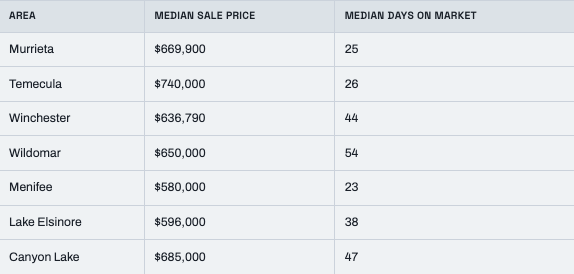
These are area-level medians from recent local market data, an individual home's value depends on condition, street, build year, and timing. But the spread matters for lifestyle planning. Menifee's lower price point and fast-moving market (23 days on market) attract buyers who want more home for their dollar and don't mind a slightly longer drive toward Temecula's core amenities. Canyon Lake is a private, gated lakefront community with a lifestyle built around the water, very different from a standard Murrieta subdivision. Winchester and Wildomar tend to move more slowly, which sometimes means more negotiating room.
If you're relocating and trying to match a community to your actual daily routine, that's exactly the kind of conversation I have with every buyer before we start touring. You can read more about what distinguishes the communities in my post on relocating to Temecula Valley and in the guide to living in Murrieta.
Community events and civic life
One underrated part of daily life here is the city's event calendar. Temecula runs city-sponsored events throughout the year, the July 4th fireworks and family program at Ronald Reagan Sports Park draws thousands of residents and is a good example of how the city uses its parks as genuine community gathering spaces, not just recreational infrastructure. According to Visit Temecula Valley, the park anchors both everyday recreation and the city's civic event programming.
Beyond city-run events, the Temecula Valley wine country adds a layer of weekend activity that residents take advantage of even if wine isn't their primary interest, the Old Town Temecula area hosts farmers markets, live music, and local dining that rounds out the social calendar.
And for residents who aren't wine-focused at all: the combination of golf, lakes, sports leagues, open-space trails, and community pool programming means there's a full recreational life available without setting foot in a tasting room.
FAQ
What is everyday life like for families who move to Temecula?
Families in Temecula typically find a recreation-forward suburban lifestyle with strong park infrastructure, organized youth sports, and community pool access. The city's 40-plus parks are distributed across residential neighborhoods rather than concentrated in one area, so most families have meaningful amenities close to home. City-sponsored events and seasonal programming add a civic dimension to daily life beyond commercial entertainment.
What do new residents do for fun in Temecula and Murrieta beyond wine tasting?
The Temecula Valley offers golf (153 holes across eight public-access courses), pickleball and tennis, youth and adult sports leagues, hiking at the Santa Rosa Plateau Ecological Reserve, boating and fishing at Lake Skinner, and trails around Diamond Valley Lake. The city's recreation facilities cover basketball, volleyball, baseball, softball, soccer, roller hockey, and skate areas, there's a full active lifestyle available that has nothing to do with the wine country.
How close are Lake Skinner and the Santa Rosa Plateau to Temecula neighborhoods?
Both are within easy reach of most Temecula Valley neighborhoods. Lake Skinner covers 6,040 acres with a 1,200-acre lake surface and sits northeast of Temecula, making it a practical weekend destination for boating and fishing rather than a special-occasion drive. The Santa Rosa Plateau Ecological Reserve is near Murrieta in southwest Riverside County and is accessible for regular trail use. Exact drive times vary by neighborhood, this is worth mapping from any specific address you're considering.
Are there enough youth sports and playground options in the Temecula Valley?
Yes, the city's recreation inventory is substantial. Named parks with sports and family amenities include Ronald Reagan Sports Park, Patricia H. Birdsall Sports Park, Harveston Community Park, and Sports Ranch at Sommers Bend, among others. Facilities include baseball and softball diamonds, soccer fields, basketball and volleyball courts, playgrounds, splash pads, and a heated community pool. Availability and seasonal hours vary by facility, so check the current schedule directly with the city.
Is Temecula convenient for commuters who work outside the valley?
Commute convenience depends heavily on where you work and which community in the valley you choose. The I-15 corridor connects the valley to San Diego to the south and the Inland Empire to the north, and commute times vary significantly by time of day and destination. This is one of the first things I walk through with relocating buyers, your commute route should factor into which city and which neighborhood makes sense for your household, not just the home itself.
The bottom line on daily life in Temecula Valley
The Temecula Valley delivers a genuinely active, community-oriented daily life, and the infrastructure to support it is real, not marketing copy. More than 40 parks, eight golf courses, regional lakes, open-space trails, and a year-round civic calendar give residents a full range of options that goes well beyond what most suburban markets offer at this price point.
What makes the difference is matching the right community to your actual routine. With a median of 26 days on market in Temecula and only 508 active listings valley-wide, the market moves fast enough that having a clear picture of where you want to land before you start touring is more than good advice, it's a practical necessity.
If you're planning a move to the Temecula Valley and want an honest breakdown of what daily life looks like in each community, reach out and let's talk through it. I've helped hundreds of buyers make this move, and getting the community right from the start makes everything else easier.
About Andrew Lewis
Andrew Lewis is a top-producing REALTOR® and founder of Performance Real Estate serving the Temecula Valley and greater Riverside County. Licensed since 2012, he has closed over 500 transactions totaling more than $200 million in sales, specializing in luxury homes, listings, new construction, relocation, and investor-focused real estate.
Real Broker · (951) 237-0292
Equal Housing Opportunity. Andrew Lewis, CA DRE, Performance Real Estate DRE 01914085 / 02022092, Real Broker, licensed by the California Department of Real Estate. This article is general information only and does not constitute legal, tax, or financial advice; confirm your specific numbers with your closing agent, tax advisor, or lender.