Temecula's luxury market centers on wine-country estates, custom builds on acreage, and upscale golf-course communities. In 2026, the high-end segment has softened relative to mid-market, giving buyers more negotiating room, but unique properties require specialist financing, careful due diligence, and a local agent who knows the luxury comps.
What does Temecula's luxury real estate market look like in 2026?
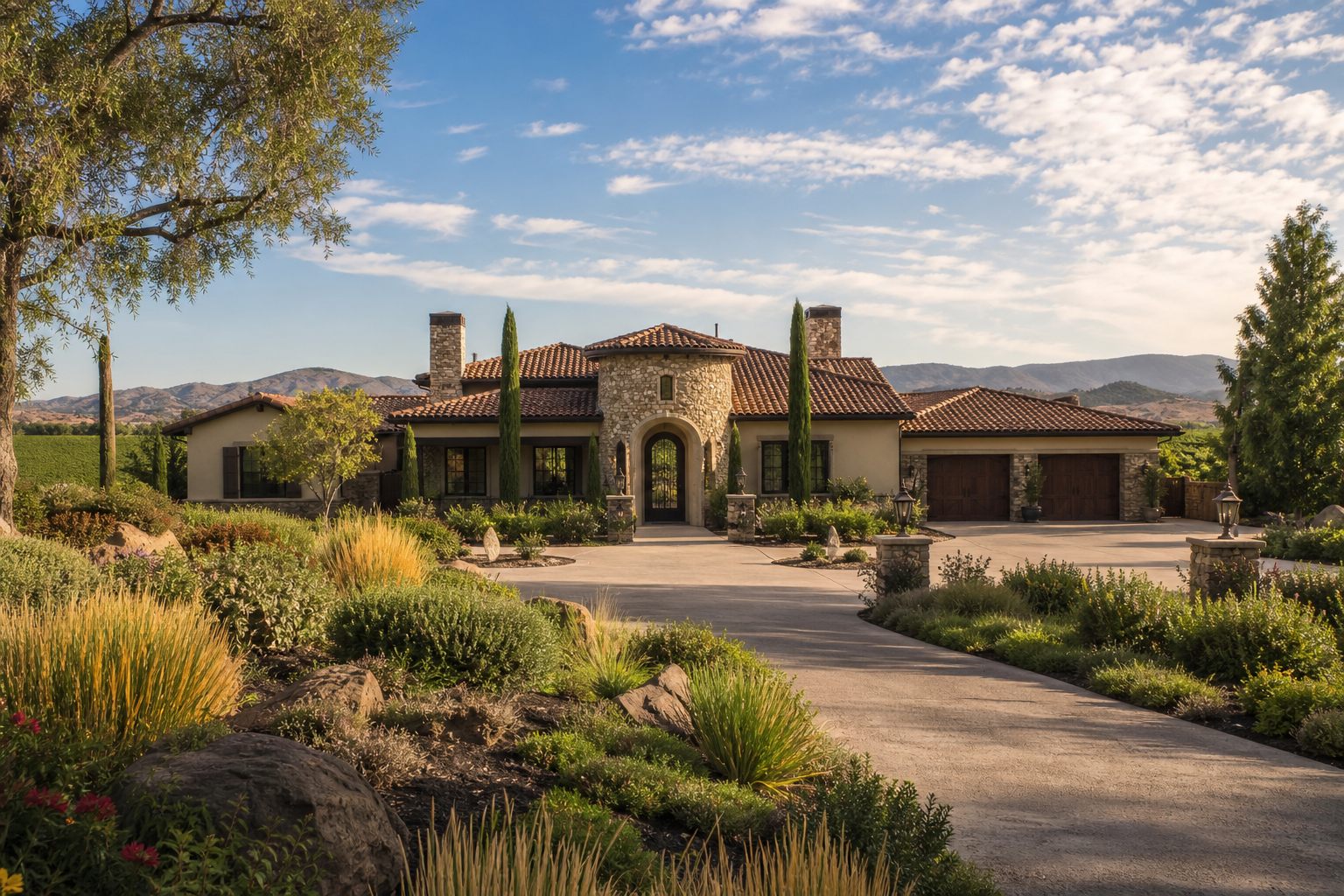
Temecula's luxury segment is defined by two distinct product types: wine-country estates on multiple acres east of Old Town, and upscale golf-course and gated communities closer to the I-15 corridor. As of September 2026, the area median sale price in Temecula sits at $755,000, and the high-end segment above that has softened relative to the mid-market, meaning buyers who can qualify have more negotiating leverage than they've had in recent years. Properties with vineyards, equestrian facilities, or large guest structures come with appraisal complexity, land-use considerations, and financing requirements that standard suburban purchases don't.
Key Takeaways
Temecula's area median sale price is $755,000 as of September 2026, with a median of 28 days on market, the highest median among the surrounding Temecula Valley communities tracked here.
Riverside County homes took an average of 39 days to sell in July 2026, up from 35 days in June, according to C.A.R. data reported in July 2026, luxury properties typically run longer than that average.
The average effective mortgage rate in California reached 6.54% in Q2 2026, per Patch Temecula's August 2026 reporting, which directly compresses borrowing power on large luxury loans.
Only 28% of Riverside County households could afford the county's median-priced home in Q2 2026, per C.A.R.'s Housing Affordability Index, the pool of buyers who can reach true luxury price points is substantially narrower.
Wine-country estates with vineyard views, equestrian facilities, and custom builds on acreage are Temecula's defining luxury product type, and they require specialist due diligence that a standard suburban purchase does not.
What makes Temecula luxury properties different from standard homes?
Temecula's luxury market isn't just "bigger house, higher price." It's a genuinely different product category, and I think that's worth saying plainly before anything else.
The defining product type here is the wine-country estate: multi-acre parcels east of Old Town, often with vineyard plantings, olive groves, or hobby agriculture, set against rolling hills with views that stretch to the mountains. International luxury portals like Le Figaro Properties regularly feature Temecula estates precisely because the combination of vineyard scenery, privacy, and large custom residences is rare at this price point compared to coastal Southern California markets.
At the upper end of the spectrum, LuxuryEstate's Temecula listings show properties exceeding multi-million-dollar price points with square footage well above 6,000 square feet, reinforcing that the ceiling here is genuinely high.
For more on what physically distinguishes these properties from the Temecula market broadly, I covered this in detail in What Sets Temecula Luxury Homes Apart.
Two distinct luxury micro-markets
The first is the wine-country corridor east of the city. Expect acreage, gated long driveways, limited street lighting, and proximity to wineries and event venues. The rural feel is the draw, but it comes with rural infrastructure realities: wells, septic systems, private roads, and fire-risk mitigation requirements are all common.
The second is suburban luxury: master-planned and golf-course communities in south and southeast Temecula. These offer larger upscale homes with gated entries, clubhouses, and closer access to commercial centers and the freeway. The luxury here is expressed through interior finish level, lot size within a community context, and amenity packages rather than raw acreage.
Both are legitimate luxury. They serve different buyers with different priorities, and I walk every client through the honest tradeoffs before we start touring.
Amenities that define the category
Across both micro-markets, Temecula luxury listings commonly include:
Resort-style pools, spas, cabanas, and outdoor kitchens built for entertaining
Detached guest houses or casitas (subject to local zoning and short-term rental regulations)
Wine cellars, tasting rooms, and dedicated entertainment wings
Barns or equestrian facilities where the parcel and zoning allow
Custom construction with multi-generational floor plans
What does the 2026 market mean for luxury buyers and sellers in Temecula?
Here's the honest picture as of September 2026.
Temecula's area median sale price is $755,000, with a median of 28 days on market, based on recent local market data. That places it as the highest-median market among the surrounding Temecula Valley communities. The table below shows how Temecula compares to neighboring areas right now:
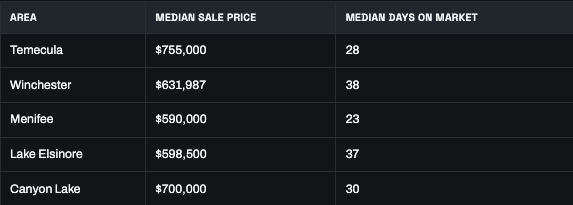
These are area-level medians. An individual home's value varies by condition, street, build year, and timing, especially in the luxury segment, where the spread from median to upper end is wide.
At the county level, C.A.R. data from July 2026 shows Riverside County home sales dropped 13.7% from June to July 2026 and were 2.6% lower than July 2025. The Unsold Inventory Index rose to 3.8 months in July, up from 3.3 months in June. Average days on market climbed to 39 days in July, from 35 in June. The market is not stalled, but it is not the frenzied pace of prior years either.
For context on where Temecula's pricing stood earlier this year, a March 2026 market snapshot reported a typical asking price of $885,000 and a typical closed price of $737,500 in the city, useful trend context, though six months old by now.
What this means for buyers
The luxury segment above the area median has softened relative to mid-market. Fewer transactions, modestly longer marketing times, and growing inventory mean buyers at higher price points have more room to negotiate on price, contingencies, and repair requests than they did in 2024 or early 2025. That's a meaningful shift.
The financing environment is the counterweight. C.A.R. data reported in August 2026 puts the average effective mortgage rate in California at 6.54% in Q2 2026, up from 6.24% in Q1. On a large luxury loan, that rate movement compresses what a given income can support. Every buyer I work with in this segment needs to run those numbers with their lender before we start touring, not after.
The affordability picture reinforces how narrow the buyer pool is. C.A.R.'s Q2 2026 Housing Affordability Index shows only 28% of Riverside County households could afford the county's median-priced home of $640,000, requiring a minimum annual income of around $159,600. The pool of buyers who can reach true luxury price points is a fraction of that. For sellers, that means marketing strategy and presentation matter more, not less.
What this means for sellers
Overpricing a luxury listing in a softening segment is expensive. Extended time on market signals weakness to the exact buyers you're trying to attract, and multiple price reductions make negotiating harder, not easier. The playbook that worked in 2022 doesn't apply here.
I covered the broader pricing question in depth in pricing a luxury listing in Temecula Valley, but the short version is that luxury sellers need recent local luxury comps, not county medians, and a clear narrative around the property's unique features before setting a number.
Presentation also carries more weight at this price point. Professional photography, drone footage of the acreage and views, virtual tours, and lifestyle-oriented marketing (vineyard potential, sunset views, event hosting capacity) are not optional extras, they're the mechanism by which a narrower buyer pool finds and falls in love with your property.
What are the key due-diligence considerations for Temecula luxury purchases?
This is where a lot of buyers underestimate the complexity. A wine-country estate is not a larger version of a suburban home, it's a different asset class with different risks and costs.
Financing and appraisal complexity
Luxury properties with vineyards, equestrian facilities, large guest structures, or significant acreage are harder to appraise. Comparable sales are fewer, more geographically spread, and more heterogeneous. An appraiser may not fully capture what makes your specific property unique, which can create an appraisal gap between the agreed purchase price and the appraised value.
Lenders also apply more scrutiny to large luxury loans: income verification, reserve requirements, and property-use classifications are all more involved. Buyers who've financed standard suburban homes are often surprised by the additional documentation and timelines. Verify all of this with your lender early, not at the point of offer.
Land, utilities, and ongoing maintenance
Large parcels come with real ongoing costs that don't show up in the listing price. Landscaping, vineyard or grove management, fencing, road and driveway upkeep, and rural infrastructure (wells, septic, private roads) are all line items that buyers need to budget honestly before committing.
Water availability and cost are particularly relevant for properties with vineyards, large pools, and extensive landscaping. Fire-risk mitigation, defensible space requirements, brush clearing, is a genuine consideration on hillside and rural parcels in Southern California's climate. These aren't dealbreakers, but they need to be part of your financial picture from day one.
Short-term rental and event use
Some buyers consider short-term rental income or event venue use (weddings, corporate retreats) as part of the financial case for a luxury Temecula estate. Local regulations on vacation rentals and event permitting are highly specific by area and zoning, and they've evolved in recent years. This is a major due-diligence step, confirm the current rules with the city or county directly before you factor that income into your purchase decision. I flag this with every client who mentions it, because the assumptions buyers bring in from other markets often don't match what's actually permitted here.
The full picture of what living in Temecula actually looks like day-to-day, beyond the property itself, is something I covered in Living in Temecula CA, which is worth reading before you commit to a specific area.
Frequently Asked Questions
What counts as a luxury home in Temecula, and what price range are we talking about in 2026?
In Temecula's context, "luxury" generally starts where the area median leaves off, with the city's median sale price at $755,000 as of September 2026, true luxury product (custom builds on acreage, wine-country estates, large upscale communities) typically begins in the $1 million-plus range and extends well into the multi-millions. A March 2026 market snapshot reported a typical asking price of $885,000 and a typical closed price of $737,500 citywide, the luxury ceiling runs considerably higher than those figures. The specific number that makes sense for your search depends on the product type, acreage, and amenities you're targeting.
Are high-end homes in Temecula sitting on the market longer in 2026?
Yes, modestly. County-level data from July 2026 shows average days on market at 39, up from 35 in June, and luxury properties typically run longer than that average because they appeal to a narrower buyer pool and involve more complex financing. The Temecula area median is 28 days across all price points, but individual luxury listings vary significantly. Extended marketing times at the high end are giving buyers more leverage than they've had in recent years.
How do 2026 mortgage rates affect what I can afford for a Temecula luxury estate?
Meaningfully. The average effective mortgage rate in California reached 6.54% in Q2 2026, according to C.A.R. data reported by Patch Temecula, up from 6.24% in Q1. On a large luxury loan, even a half-point rate move changes monthly payments by hundreds of dollars and reduces how much you can borrow at a given income. Run your specific numbers with a lender who has experience with jumbo and non-conforming products before you set your search parameters.
What should I look for in a Temecula luxury property if I want vineyards, equestrian facilities, or a guest house?
Start with zoning and water, those two factors determine what's actually permitted and feasible on a given parcel. Vineyard operations require reliable water access and ongoing management costs; equestrian facilities need appropriate zoning and setbacks; guest houses and casitas may have separate permitting requirements. Temecula's wine-country estates are designed around these uses, but each property's entitlements are specific to that parcel. A thorough inspection and title review, handled by your closing agent and relevant specialists, is essential before you commit.
What are the main risks of buying a large rural luxury property in Temecula versus a standard suburban home?
The biggest risks are appraisal gaps (fewer comps for unique properties can create a difference between purchase price and appraised value), higher ongoing maintenance costs (landscaping, wells, septic, private roads, fire mitigation), and financing complexity (lenders scrutinize large loans and unconventional property types more closely). There's also the lifestyle reality check: rural wine-country parcels come with limited street lighting, more distance from services, and weekend traffic from winery events. None of these are reasons not to buy, but they're all things to price honestly before you make an offer.
The Bottom Line
Temecula's luxury market in 2026 offers a genuinely distinctive product, wine-country estates, custom builds on acreage, and upscale communities with views you won't find at this price point on the coast, in a market environment that has shifted meaningfully in buyers' favor at the high end. The complexity is real, and the details matter: financing, appraisal, land use, and due diligence all look different here than on a standard suburban purchase.
If you're considering a luxury home in Temecula Valley, the right starting point is a conversation about your specific goals, timeline, and financial picture. I work with buyers and sellers across this segment and can walk you through current luxury comps, realistic timelines, and what to watch for in due diligence. Schedule a consultation with Performance Real Estate and let's build a game plan that fits your situation.
About Andrew Lewis
Andrew Lewis is a top-producing REALTOR® and founder of Performance Real Estate, serving the Temecula Valley and greater Riverside County. Licensed since 2012, he has closed over 500 transactions totaling more than $200 million in sales, specializing in luxury homes, listings, new construction, relocation, and investor-focused real estate.
Real Broker · (951) 237-0292
Equal Housing Opportunity. Andrew Lewis, CA DRE, Performance Real Estate DRE 01914085 / 02022092, Real Broker. California Department of Real Estate. This article is general information only and does not constitute legal, tax, or financial advice. Confirm your own costs and transaction details with your closing agent, tax advisor, or lender.