A REALTOR® in Temecula Valley manages pricing, paperwork, negotiations, disclosures, and escrow coordination so buyers and sellers don't have to navigate it alone. Beyond a license, a REALTOR® is bound by NAR's Code of Ethics and brings local market knowledge that directly affects your price and timeline.

What does a REALTOR® actually do in a Temecula Valley real estate transaction?
A REALTOR® in Temecula Valley handles far more than opening doors and writing offers. From pricing strategy and disclosure coordination to escrow management and negotiation, a good agent is the person keeping your transaction on track, on time, and as stress-free as possible. The difference between a smooth closing and a chaotic one almost always comes down to the experience and local knowledge of the agent in your corner.
What Sets a REALTOR® Apart (and Why It Matters in California)
Not every real estate agent is a REALTOR®. The title REALTOR® is a registered membership mark owned by the National Association of REALTORS®, and it only applies to licensees who are NAR members and have agreed to abide by its Code of Ethics. That code requires duties of honesty, disclosure, and putting clients' interests first. It goes beyond what California state law requires of a licensed agent.
In California, all agents must be licensed through the California Department of Real Estate (DRE), which sets education, exam, and affiliation requirements. But a license alone doesn't make someone a REALTOR®. Members must also belong to a local REALTOR® association and the California Association of REALTORS® (C.A.R.), which gives them access to the standard contract forms used in virtually every residential transaction in the state.
That last point matters more than people realize. C.A.R. standard forms, including the Residential Purchase Agreement and its addenda, are the backbone of every Temecula Valley deal. Knowing those forms cold, and knowing where the risk points are, is a skill that comes from repetition.
What a Temecula Valley REALTOR® Actually Does, Step by Step
Pricing and Market Analysis
Getting the price right from the start is where a REALTOR®'s local knowledge pays off most directly. In my experience, a home priced well in the first week generates more competitive offers than one that sits and gets reduced. The current Temecula Valley market rewards that discipline.
Recent Zillow market data shows a median sale price of $749,900 in Temecula, with homes spending a median of 32 days on market and 511 active listings as of August 2026. That's a moderately competitive environment, not a frenzy, but not a buyer's market either. Pricing too high means sitting; pricing too low leaves money on the table. A comparative market analysis from a local agent, using actual closed sales in your specific neighborhood, is the most reliable way to find that number.
Here's how conditions vary across the valley right now, based on recent Zillow sales data:
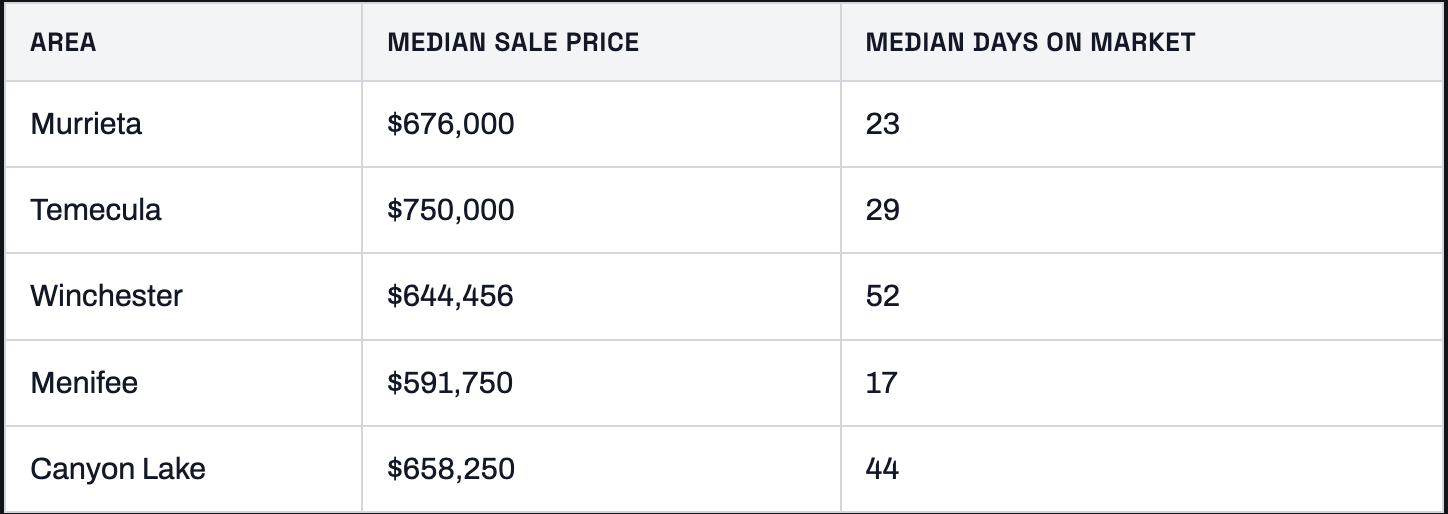
Those differences are significant. A strategy that works in Menifee, where homes are moving in 17 days, looks very different from what's needed in Winchester, where the median is 52 days. Your REALTOR® needs to know the specific area you're buying or selling in, not just the general valley.
Offer Strategy, Negotiation, and Contracts
According to the NAR 2024 Profile of Home Buyers and Sellers, roughly 85-90% of buyers purchase through a real estate agent or broker, and sellers overwhelmingly use agents over FSBO. NAR also reports that FSBO homes tend to sell for less than agent-assisted homes, attributing the gap to pricing, marketing, and negotiation expertise.
In Temecula Valley, offer dynamics in 2026 still require real strategy. A meaningful share of homes sell at or above list price, which means buyers need more than just a number, they need terms that hold up. That includes contingency structure, earnest money, appraisal gap language, and lender credibility. I walk every buyer through what each of those levers does before we submit anything.
For sellers, evaluating multiple offers isn't just about the highest price. A cash offer at $10,000 under list can be stronger than a financed offer $15,000 over, depending on appraisal risk and the buyer's loan qualification. I help my clients read the full picture, not just the headline number.
Broker fees and commissions are fully negotiable and not set by any law or standard rate. The listing fee is agreed in your listing agreement, and any compensation offered to a buyer's agent is a separate, optional decision, not an automatic cost. If you want to understand how that works in your specific situation, that's a conversation worth having directly. For more background, see Do Temecula Sellers Pay Buyer's Agent Commission?
Disclosures, Inspections, and Local Due Diligence
California has some of the most comprehensive disclosure requirements in the country. The California DRE and C.A.R. require sellers to provide a Transfer Disclosure Statement, a Natural Hazard Disclosure, and lead-based paint disclosures for pre-1978 homes, among others. In Temecula Valley, those disclosures often include wildfire risk zones, earthquake fault proximity, and flood considerations specific to Riverside County.
Local nuances add another layer. Properties in Temecula's wine country may involve wells, septic systems, agricultural uses, or vacation rental zoning questions. Homes in master-planned communities like Wolf Creek or Redhawk come with HOA rules covering parking, short-term rentals, and architectural approvals. Rural lots near the foothills carry different hazard profiles than tract homes near the I-15 corridor. A REALTOR® who knows this market has relationships with the right well, septic, pest, and pool inspectors, and knows which questions to ask before you're three weeks into escrow.
For buyers relocating from out of the area, I always make sure they understand what daily life actually looks like in the specific community they're considering, not just what the home looks like on paper. Noise from a nearby arterial, HOA restrictions on RV parking, or a longer commute to the 15 can matter more than an extra bedroom once you're living there.
Escrow, Timeline, and Closing Coordination
In Southern California, financed transactions typically run about 30 days from accepted offer to closing, per C.A.R. consumer guidance and standard Residential Purchase Agreement timelines. Temecula Valley transactions follow that same pattern. Within those 30 days, there are contingency deadlines for inspection, appraisal, and loan approval, each with specific windows that, if missed, can affect your ability to back out or renegotiate.
Managing that calendar is one of the highest-value things a REALTOR® does. I track every deadline and make sure my clients never find out about a missed date after the fact. I also coordinate with the escrow and title companies, which in Riverside County are typically separate entities from the lender, to make sure preliminary title reports, HOA demand statements, and lender conditions are resolved before they become last-minute problems at the signing table.
Cost categories in a Temecula transaction include escrow fees, title insurance (lender's and owner's policies), recording fees paid to Riverside County, natural hazard and disclosure report fees, home and pest inspections, and HOA transfer fees where applicable. Which of those are fixed by law versus negotiable between the parties varies, and your REALTOR® can explain each one clearly. For a fuller breakdown of what sellers typically encounter, see Cost to Sell a House in Temecula Valley.
Frequently Asked Questions
Do I really need a REALTOR® to buy a house in Temecula, or can I just work with the listing agent?
You can legally work with the listing agent directly, but that agent represents the seller's interests. Without your own buyer's agent, you're navigating pricing, contingencies, and negotiations without anyone in your corner. In a moderately competitive market like Temecula Valley in 2026, having an experienced buyer's agent reviewing the contract and advising on offer terms is a meaningful advantage, not a formality.
What does a buyer's agent in Temecula actually do from offer to closing?
A buyer's agent prepares and submits your offer, advises on contingency structure and earnest money, coordinates inspections, tracks all contract deadlines, reviews the preliminary title report and disclosure package, and communicates with the listing agent, lender, and escrow company throughout the roughly 30-day escrow period. In Temecula Valley specifically, that often includes navigating HOA documents, natural hazard disclosures, and, for wine-country or rural properties, well and septic inspection coordination.
How can a Temecula REALTOR® help me price my home correctly in this 2026 market?
A local REALTOR® pulls closed sales data from comparable homes in your specific neighborhood, not just the city-wide median, and factors in condition, upgrades, lot size, and current inventory levels. With median days on market ranging from 17 days in Menifee to 52 in Winchester as of August 2026, the right price varies significantly by area. A well-priced home generates more competitive offers in the first week than one that sits and requires a reduction later.
Is the Temecula housing market still competitive in 2026, and how can a REALTOR® give me an edge as a buyer?
Yes, moderately. Recent Zillow market data shows Temecula homes selling in a median of 29 days, with a meaningful share closing at or above list price. A REALTOR® gives buyers an edge by advising on contingency terms, earnest money positioning, and lender credibility, factors that can matter as much as price when a seller is weighing multiple offers. Knowing current local norms for what sellers expect is something you only get from someone active in this market.
What is the difference between a California licensed real estate agent and a REALTOR®, and why does it matter?
Every agent in California must hold a license from the California DRE, but only those who are also NAR members can call themselves REALTORS®. REALTORS® are bound by NAR's Code of Ethics, which includes duties of honesty, full disclosure, and placing clients' interests first. They also have access to C.A.R. standard forms used in virtually every California residential transaction. In practice, working with a REALTOR® adds an ethical accountability layer beyond the state license alone.
What local fees or disclosures should I expect when selling a home in Temecula Valley?
California requires a Transfer Disclosure Statement, Natural Hazard Disclosure, and other forms specific to your property's characteristics. In Temecula Valley, that often means disclosures related to wildfire risk zones, HOA governing documents, and, for rural or wine-country properties, well and septic systems. Cost categories include escrow fees, title insurance, recording fees, and HOA transfer fees where applicable. Who pays which costs is often negotiable and governed by the purchase contract, not a fixed rule.
Getting clarity on all of this before you list or make an offer is exactly the kind of game plan that makes the whole process less stressful. Every situation is different, and the only way to know what applies to your specific property is to walk through it with someone who knows Temecula Valley.
If you're buying your first home here, Buying Your First Home in Temecula covers the most common and costly mistakes to avoid before you start.
Ready to talk through your specific situation? Schedule a consultation with Andrew Lewis and get a clear plan before your next move.
About Andrew Lewis
Andrew Lewis is a top-producing REALTOR® and founder of Performance Real Estate serving the Temecula Valley and greater Riverside County. Licensed since 2012, he has closed over 500 transactions totaling more than $200 million in sales, specializing in luxury homes, listings, new construction, relocation, and investor-focused real estate.
Real Broker · (951) 237-0292
Equal Housing Opportunity. Andrew Lewis, CA DRE, affiliated with Performance Real Estate DRE 01914085 / 02022092, Real Broker. This article is general information only and is not legal, tax, or financial advice. Please confirm your specific costs, disclosures, and transaction details with your attorney, tax advisor, lender, or escrow officer. Regulated by the California Department of Real Estate.