By Andrew Lewis
Buying new construction in Murrieta means navigating builder contracts, lot releases, warranty tiers, and a sales process designed around the builder's interests. Understanding each step, from representation agreements to punch-list inspections, puts you in a stronger position before you sign anything.
What do buyers need to know before purchasing new construction in Murrieta?
Buying a new construction home in Murrieta is a fundamentally different process than buying resale. Builder contracts are written to protect the builder, not the buyer. Warranties are tiered by item type, not a blanket coverage. And the onsite sales rep works for the builder, not for you. Going in with a clear understanding of how the process works, and having your own representation in place before you walk into a model home, is how you avoid costly surprises.
Why Murrieta's New Construction Market Matters Right Now
Murrieta continues to attract buyers looking for newer inventory in a market where resale supply remains tight. According to recent TemeculaNow market reporting, the broader Temecula Valley area saw as little as 1.04 months of housing supply as recently as February 2026. When resale inventory is that compressed, builder inventory and release timing become real factors in your search.
Recent Zillow market data puts Murrieta's median sale price at $676,000 with a median of 22 days on market across roughly 463 homes sold in the last 90 days. That's a competitive baseline. New construction in Murrieta often prices at or above that median depending on the builder, community, and lot position, so understanding what you're actually getting for the premium matters.
For context, here's how Murrieta compares to nearby communities across the Temecula Valley:
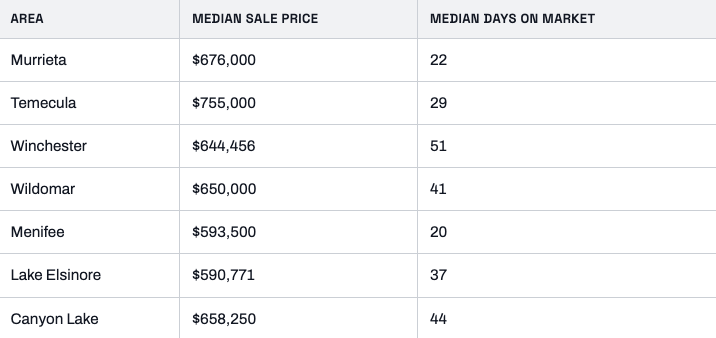
Source: Zillow sales data, trailing ~90 days, as of August 2026. Area-level medians, individual home values vary by condition, street, and timing.
New construction is also actively expanding in the broader valley. A City of Temecula land-development status document dated July 22, 2026 listed a project involving approximately 164 single-family residential homes in the southeast portion of the city, one example among several active developments. If you're comparing new builds across communities, I cover the Temecula side in detail in my Altair at Temecula buyer's guide.
The New Construction Buying Process: What's Different
1. Bring your own agent, and do it before the first visit
This is the step most buyers skip, and it costs them. The builder's onsite sales team is professionally trained, knowledgeable, and 100% working for the builder. That's not a criticism, it's just the reality. Their job is to sell the community at the builder's terms.
California law changed effective January 1, 2025: under a California Department of Real Estate advisory, buyers' agents must have a signed buyer-broker representation agreement in place no later than when a buyer executes an offer to purchase. In practice, this means you need to have your representation sorted before you're ready to write on anything, including a new build. If you tour a model home without registering your agent, many builders will not allow that agent to represent you later in the transaction.
Having your own agent at the table means someone is reviewing the builder's purchase contract for terms that don't favor you, negotiating upgrades or closing cost contributions, and flagging what's standard versus what's a red flag.
2. Understand how builder contracts work
Builder purchase agreements are not the standard California Association of Realtors forms you'd see in a resale transaction. They're written by the builder's legal team, and they often include terms like:
Lender requirements, many builders strongly incentivize (or require) you to use their preferred lender to qualify for upgrade credits or rate incentives. Always compare that offer against outside financing before committing.
Change order limitations, once you pass the design center stage, structural changes are typically locked. Cosmetic changes may remain available, but at a cost.
Completion timeline language, builder contracts typically give wide latitude on delivery dates. Understand what happens to your deposit if the build runs significantly over schedule.
Arbitration clauses, many builder contracts include mandatory arbitration provisions for disputes. Know what you're agreeing to before you sign.
Every builder is different, and the specifics depend on which community and contract you're looking at. This is exactly the kind of contract review I do with my clients before anything gets signed.
3. Deposits and earnest money on new construction
New construction deposits work differently than resale. Builders typically require an initial deposit at contract signing, with additional deposits due at design center selections and at various construction milestones. These amounts vary by builder and community, some are modest, others are substantial.
The critical question is what happens to those deposits if you need to exit the contract. Builder contracts vary widely on refundability. Some deposits are fully refundable during a defined contingency window; others are not. This is not a place to assume, read the contract language carefully, and have your agent walk you through the exit provisions before you write a check.
4. Inspections still matter, even on a brand-new home
A common misconception is that new construction doesn't need an independent inspection because everything is new and permitted. That's not how I approach it with my clients. Permit inspections are conducted by the city or county to verify code compliance, they're not a comprehensive quality review performed on your behalf.
An independent third-party inspection on a new build can catch issues ranging from grading and drainage to HVAC installation and framing, things that are far easier (and cheaper) to address before you close than after. For Murrieta and Temecula builds, permitting and inspections run through Riverside County or the relevant city building department depending on jurisdiction. Either way, that process protects the municipality's interests, not yours.
5. Know your warranty coverage, it's tiered, not blanket
California provides statutory warranty protections for new construction buyers, but they're not all the same length. Under California Civil Code Section 900, if a builder does not provide its own express warranty, buyers receive a minimum one-year written limited warranty on "fit and finish" items, cabinets, mirrors, flooring, interior and exterior walls, countertops, paint finishes, and trim.
Structural defects carry longer statutory protections under California law, but the specifics depend on the type of defect and whether the builder's own express warranty modifies the statutory baseline. The practical takeaway: document everything at your final walkthrough, submit a formal punch list before closing, and understand what your builder's express warranty covers versus what defaults to the statutory minimums. Don't assume "it's new, so it's covered" for the same period across every item.
If you want a full breakdown of what to watch for on costs beyond the purchase price, my post on hidden costs of living in Temecula covers ongoing expenses that apply to new builds too.
Closing Costs on New Construction in Riverside County
Closing costs on a new construction home include many of the same categories as resale, title insurance, escrow fees, lender fees, prepaid property taxes, and HOA transfer fees where applicable. A few items are worth calling out specifically for Riverside County new builds.
Riverside County collects a documentary transfer tax on taxable conveyances. According to the Riverside County Assessor-County Clerk-Recorder, the rate is $0.55 per $500 of real property value (excluding liens already of record), collected at the time of recording. Who bears this cost is commonly negotiated between the parties, confirm the allocation in your specific contract rather than assuming one side or the other pays it.
New construction communities in Murrieta frequently carry Mello-Roos Community Facilities District (CFD) assessments and HOA fees that don't appear in the purchase price. These are ongoing costs that affect your monthly payment and long-term ownership costs. Ask the builder's sales team for the full CFD disclosure and the HOA budget documents before you're under contract, not after.
Builder incentives tied to their preferred lender (rate buydowns, closing cost credits) can be genuinely valuable, but they need to be compared against outside financing on an apples-to-apples basis. Your own lender can run that comparison. For a broader look at what different price points buy you across Murrieta's communities, my post on what different price points get you in Murrieta gives useful context.
Every situation is different, and the only way to know what your actual costs look like is to run the numbers with someone who knows this market and your specific contract. That's the conversation I have with every new construction buyer before they get to the design center.
Frequently Asked Questions
Do I need my own agent when buying a new construction home in California?
Yes, and you need to have a signed buyer-broker representation agreement in place before you execute an offer, per California law effective January 1, 2025. The builder's onsite sales team represents the builder's interests. Your agent reviews the contract, negotiates on your behalf, and advocates for you through closing, none of which the builder's rep is positioned to do.
What warranties come with a new construction home in California?
California Civil Code Section 900 provides a minimum one-year express written limited warranty on fit and finish items (flooring, paint, trim, cabinetry, countertops) if the builder doesn't provide its own warranty. Structural defects carry longer statutory protections under separate code sections. Most builders also provide their own express warranty, read it carefully and compare it to the statutory baseline before assuming more coverage than you have.
What should I ask a builder before buying a new construction home in Murrieta?
Ask for the full CFD/Mello-Roos disclosure and HOA budget documents upfront. Ask what the deposit schedule looks like and which deposits are refundable and under what conditions. Ask about the construction timeline and what remedies you have if the build is significantly delayed. And ask what's included in the base price versus what's an upgrade, the gap between model home and base price can be substantial.
How does the deposit and earnest money process work for new construction?
Builder deposits are typically structured in stages: an initial deposit at contract signing, additional amounts at design center selections, and sometimes further deposits at construction milestones. Refundability varies by builder and contract, some deposits are refundable during a defined contingency window, others are not. Never assume your deposit is protected without reading the specific contract language.
How long does it take to build a new home in Temecula Valley?
Build timelines vary by builder, community, and where you are in the release cycle. A production home in an active Murrieta or Temecula community typically runs six to twelve months from contract to close, though supply chain conditions and permitting timelines can extend that. If you're buying a spec home (already under construction), the timeline is shorter. Builder contracts generally give wide latitude on delivery dates, understand those terms before signing.
New construction in Murrieta can be a strong move, newer systems, builder incentives, and the ability to personalize your home before it's built are real advantages. But the process is designed around the builder's workflow, not yours. Going in with the right representation, a clear read on the contract, and a realistic picture of total costs is what separates a smooth transaction from an expensive lesson.
If you're considering a new build in Murrieta or anywhere in the Temecula Valley, schedule a consultation with me before you visit a model home. I'll walk you through what to look for, what to ask, and how to make sure the deal actually works in your favor.
About Andrew Lewis
Andrew Lewis is a top-producing REALTOR® and founder of Performance Real Estate serving the Temecula Valley and greater Riverside County. Licensed since 2012, he has closed over 500 transactions totaling more than $200 million in sales, specializing in luxury homes, listings, new construction, relocation, and investor-focused real estate.
Real Broker · (951) 237-0292
Equal Housing Opportunity. Andrew Lewis, CA DRE, Performance Real Estate DRE 01914085 / 02022092, Real Broker, licensed by the California Department of Real Estate. This article is general information only and does not constitute legal, tax, or financial advice. Confirm your specific costs, contract terms, and tax obligations with your attorney, tax advisor, lender, or escrow officer.