Whether to sell now or wait depends on your equity position, timeline, and local demand. In Temecula Valley, recent data shows a median sale price of $775,000 with homes moving in about 28 days, softer than peak years but not a collapse. The right answer is personal, not universal.
Should you sell your Temecula Valley home in a down market, or wait it out?
If your home has equity and you have a real reason to move, a softer market doesn't automatically mean the wrong time to sell. In Temecula Valley right now, homes are still selling at a median of $775,000 and moving in around 28 days, according to recent Zillow market data. That's not a crash. But it is a shift, and how you navigate it matters more than the market itself.
What the Temecula Valley Market Actually Looks Like in 2026
Let's start with what the numbers actually say, because "down market" means different things to different people.
Recent Zillow market data for Temecula shows:
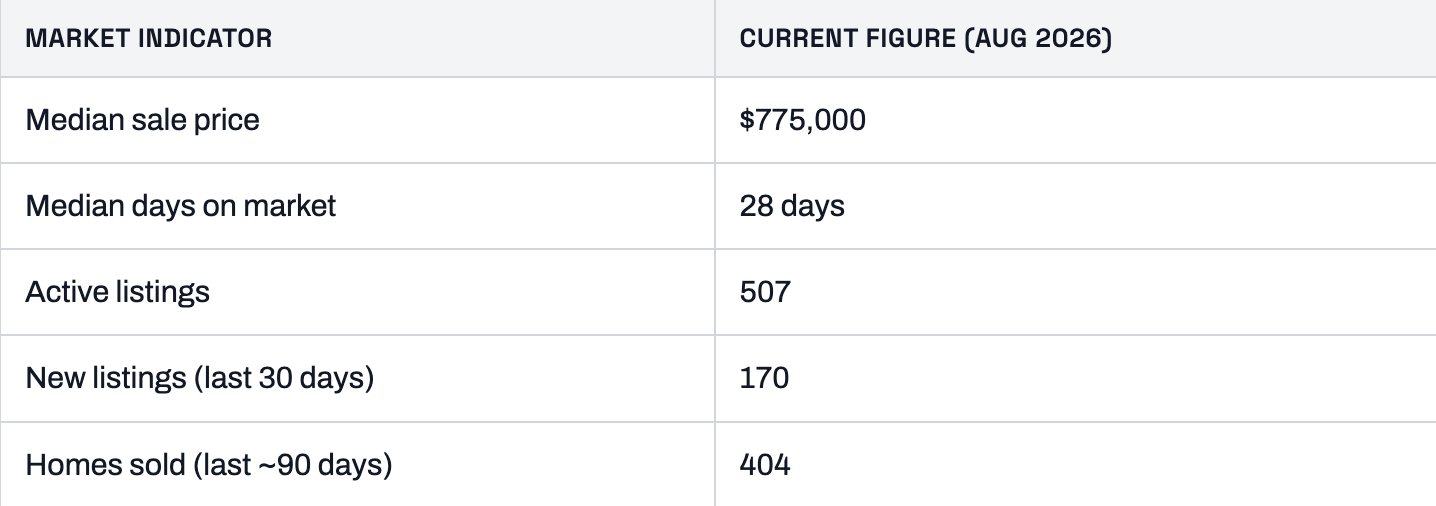
What those numbers tell me: inventory is elevated relative to the frenzied pace of 2021-2022, buyers have more choices, and homes are sitting longer than they did at peak. But 28 days on market isn't a disaster. Buyers are still active. The pool is just more selective now.
This matters because "down market" can mean a 3% price correction or a 15% one. In Temecula Valley, we're not seeing a freefall. What we're seeing is a normalization, and those two things require very different responses from a seller.
For broader context on where California housing sits relative to national trends, the California Association of REALTORS® market data center publishes monthly county-level stats that I track alongside local MLS activity. The National Association of REALTORS® research hub also provides useful national benchmarks to compare against our local picture.
What "softer" actually means for your price
In a normalized market, overpriced homes sit. Full stop. The sellers who are getting hurt right now aren't the ones selling in a down market. They're the ones who priced for 2022 and are chasing the market down with price reductions every two weeks.
Pricing a listing correctly in the first week still beats any other strategy I've seen. When a home is priced right from day one, it competes. When it's priced at what you wish the market was, it doesn't. That's true in any market, but it's especially punishing in a softer one where buyers have options.
The Real Question: Why Are You Selling?
This is the conversation I have with every seller who calls me asking whether to wait. The market is only one variable. Your situation is the other, and it usually matters more.
Reasons to sell now, even in a softer market
You're relocating or have a life change with a real deadline. Waiting for a better market when you need to move in six months isn't a strategy, it's wishful thinking.
You have significant equity. If you bought before 2019 or put a large down payment down, you likely have a cushion that absorbs a modest price softening and still leaves you in a strong position.
You're upsizing in the same market. If you're selling a $775,000 home to buy a $1.1M home, a 5% market dip hurts you on the sell side but helps you on the buy side. The net effect is often neutral or even favorable.
You want to avoid carrying costs. Every month you hold a home you don't want to own is a month of mortgage, taxes, insurance, maintenance, and HOA fees. That's real money leaving your pocket while you wait for a market that may or may not recover on your timeline.
Reasons waiting might make sense
You have minimal equity. If you bought near peak and your loan balance is close to current market value, selling in a down market could mean bringing cash to closing. That changes the math entirely.
You have genuine flexibility and no urgency. If you can wait 12-24 months without financial strain, and you believe the local market will recover, holding is a legitimate option.
You're considering a rental conversion. More on this below, but it's worth evaluating seriously if your carrying costs are manageable and you want to hold the asset long-term.
Every situation is different, and the only way to get a real answer is to run your specific numbers. That's what a personalized seller consultation is for.
The Rent-It-Out Option: What Sellers in Temecula Valley Are Actually Weighing
I get this question a lot right now: "What if I just rent it out and wait for the market to come back?"
It's not a bad idea, but it's not a simple one either. Here's what you need to think through honestly.
The case for renting it out
Temecula Valley has a steady rental demand, partly driven by the same relocation patterns that bring buyers here from San Diego and Orange County. Families relocating from San Diego who aren't ready to buy are often strong rental candidates. If your property cash-flows or at least breaks even, holding it as a rental while you wait for appreciation is a real wealth-building strategy.
According to U.S. Census American Community Survey data, Riverside County has seen consistent population growth over the past decade, which supports long-term rental demand in this corridor.
The honest drawbacks
Negative cash flow is a real risk. If your mortgage, taxes, insurance, and HOA add up to more than market rent, you're paying to hold the asset. That cost compounds over time.
Landlord responsibilities are real. Tenant placement, maintenance calls, California's tenant protection laws, and potential vacancy periods are not passive income for most people.
Capital gains exposure changes. If you move out and convert to a rental, you may lose part or all of the IRS Section 121 primary residence exclusion if you sell later. That's a tax planning question worth a conversation with your CPA before you make the call.
Deferred maintenance adds up. A home you're not living in still needs upkeep. Tenants accelerate wear. When you eventually sell, condition affects price.
The rental path works well for some sellers and is a financial trap for others. The difference is almost always in the specific numbers, not the general concept.
What the cost-to-sell picture looks like qualitatively
I'm not going to publish a generic net-sheet here, because the numbers are too specific to your home to be useful in a blog post. What I can tell you is that selling in California involves several cost categories: title insurance, escrow fees, documentary transfer tax (set by California Revenue and Taxation Code Section 11911), prorated property taxes, any Mello-Roos or HOA transfer fees, and broker compensation. Some of these are fixed by statute or close date. Others are negotiated between the parties. Broker fees are fully negotiable and not set by law. There is no standard or customary rate. What any of this means for your net proceeds depends on your specific loan balance, your home's condition, and the final sale price. That's a conversation, not a formula.
The Consumer Financial Protection Bureau's mortgage resources are a good starting point if you want to understand the general mechanics of a home sale from a consumer-protection standpoint before we talk.
My Honest Take for Temecula Valley Sellers Right Now
Here's what I tell sellers who are genuinely on the fence:
A market that's normalized is not a market that's broken. Temecula Valley homes are still selling. Buyers are still here, many of them coming from higher-cost coastal markets where $775,000 looks very different than it does back home. If you read about why families are leaving San Diego for Temecula, you'll understand the demand profile that's still driving this market even in a softer cycle.
What changes in a down market is the margin for error. Overpricing, poor presentation, and bad timing hurt more when buyers have options. That's where having the right team matters. My job isn't to tell you what you want to hear about your home's value. It's to give you an honest picture of what the market will pay, what your net looks like, and whether now makes sense for your specific situation.
If you're comparing Temecula to other parts of the valley, it's also worth understanding the price spread across the region. Our post on Temecula vs. Hemet pricing gives useful context on how local geography affects value in ways that matter to both sellers and buyers.
For California-specific seller guidance, the California Department of Real Estate's consumer resources are worth reviewing. And if you're tracking the broader Riverside County picture, the Riverside County Assessor's office is where assessed values and property records live.
Frequently Asked Questions
Is now a good time to sell in Temecula Valley?
"Good" depends on your situation. Recent market data shows a median sale price of $775,000 and a median of 28 days on market in Temecula, which reflects a normalized market, not a collapsed one. If you have equity, a real reason to move, and price your home correctly, selling now is a viable path. If you're underwater or have no urgency, waiting or renting may make more sense.
How much will I lose selling in a down market in Temecula?
That depends entirely on what you paid, what you owe, your home's current condition, and what comparable homes are actually selling for today. There's no universal answer. What I can tell you is that sellers who price accurately and prepare their homes well consistently outperform those who don't, regardless of market conditions. A personalized analysis of your specific property is the only way to get a real number.
Should I rent out my Temecula home instead of selling?
It's worth evaluating seriously, but not casually. The key questions are whether the rental income covers your carrying costs, whether you're prepared for the responsibilities of being a California landlord, and how a rental conversion affects your tax position when you eventually sell. The IRS Section 121 primary residence exclusion has residency requirements that change once you move out. Talk to a CPA before making this decision.
How long are homes sitting on the market in Temecula right now?
Recent Zillow market data shows a median of 28 days on market in Temecula as of August 2026. That's longer than the frenzied pace of 2021-2022 but still reflects active buyer demand. Homes that are priced correctly and show well are moving. Overpriced homes are sitting significantly longer and often require price reductions that cost more than a correct initial price would have.
What costs should I expect when selling a home in California?
California sellers typically face title insurance, escrow fees, documentary transfer tax (governed by California Revenue and Taxation Code Section 11911), prorated property taxes, HOA transfer fees if applicable, and broker compensation. These vary by home, transaction, and what's negotiated in the purchase contract. Broker fees are fully negotiable and not set by any law or association. For your actual net proceeds, you need a personalized seller net sheet, which I provide as part of every listing consultation.
The bottom line: a softer market doesn't mean you can't sell. It means you need a sharper strategy. If you want an honest read on what your Temecula Valley home is worth today, what your net looks like, and whether selling, waiting, or renting makes the most sense for your situation, let's talk.
Schedule a no-pressure seller consultation with Andrew: performanceregroup.com/contact
About Andrew Lewis
Andrew Lewis is a top-producing REALTOR® and founder of Performance Real Estate, serving the Temecula Valley and greater Riverside County. Licensed since 2012, he has closed over 500 transactions totaling more than $200 million in sales, specializing in luxury homes, listings, new construction, relocation, and investor-focused real estate.
Real Broker · (951) 237-0292
Equal Housing Opportunity. Andrew Lewis, CA DRE, Performance Real Estate DRE 01914085 / 02022092, Real Broker, licensed by the California Department of Real Estate. This article is general information only and does not constitute legal, tax, or financial advice. Confirm your specific numbers and situation with your attorney, tax advisor, lender, or escrow officer before making any real estate decision.