By Andrew Lewis

Yes, you can sell a house with foundation issues in Temecula Valley. California law requires full disclosure, and the defect will affect price and buyer pool, but with the right strategy, honest pricing, and a clear repair picture, a sale is absolutely achievable.
Can you sell a house with foundation issues in Temecula Valley?
Yes, you can sell a home with foundation problems in Temecula Valley. California law requires you to disclose known material defects, including structural and foundation issues, before closing. The defect will affect your price and the type of buyer you attract, but with honest pricing, a current inspection report, and the right positioning, selling is entirely realistic in today's market.
Foundation problems are one of the most emotionally loaded issues a seller can face. I've worked with homeowners in Murrieta, Temecula, and Winchester who discovered cracking, settling, or drainage-related movement right before they planned to list, and every one of them asked me the same question: is this a deal-killer?
The short answer is no. The longer answer is that how you handle it determines everything.
What California Law Requires You to Disclose
California has some of the most comprehensive seller disclosure requirements in the country. Under California Civil Code Section 1102, sellers of residential property (one-to-four units) are required to complete a Transfer Disclosure Statement, commonly called the TDS. Any known material defect, including foundation cracks, settling, soil movement, or prior structural repairs, must be disclosed on that form.
The California Department of Real Estate makes clear that "material" means anything that would affect a reasonable buyer's decision to purchase or the price they'd pay. Foundation issues almost always qualify. Failing to disclose a known defect exposes you to post-close litigation, rescission claims, and potential liability for the buyer's repair costs. Disclosure is not optional, it's protection for you as much as it is for the buyer.
Beyond the TDS, California's Natural Hazard Disclosure requirements may also be relevant if the foundation issue is connected to expansive soils, seismic activity, or a landslide zone. Temecula Valley sits in Riverside County, and portions of the area carry geologic and seismic considerations that can intersect with foundation performance. A licensed geotechnical or structural engineer can tell you whether the issue is cosmetic settlement or something tied to soil conditions.
The California Association of REALTORS® also publishes a Seller Property Questionnaire (SPQ) that most transactions include alongside the TDS, it asks specifically about structural issues, drainage, and past repairs. Answer it completely and accurately.
Here's what I tell sellers in this situation: disclose everything you know, get a professional report that defines the scope, and let the market respond to facts rather than fear. Buyers who discover a problem after close become plaintiffs. Buyers who see a disclosed, documented issue with a repair estimate become negotiators, and negotiators close deals.
How Foundation Issues Affect Price, Buyer Pool, and Timeline
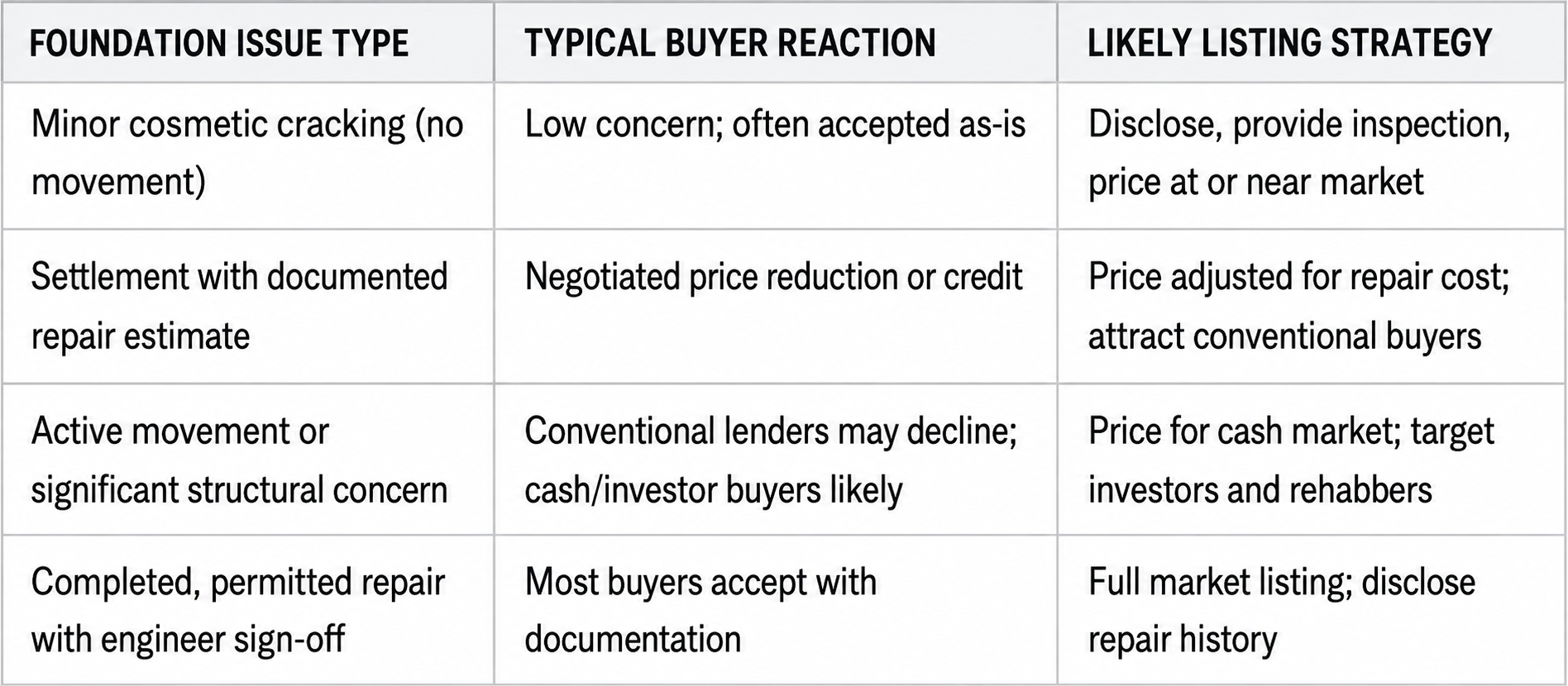
Let's be direct about the impact. Foundation issues reduce your buyer pool and will affect your price. The degree depends on three things: the severity of the problem, whether you've obtained a repair estimate (or completed the repair), and how the listing is positioned.
The current market context
Recent Zillow market data shows the median sale price in Temecula at $768,000, with homes spending a median of 29 days on market. There are currently 508 active listings, with 167 new listings added in the past 30 days and roughly 400 homes sold in the trailing 90 days. That's a functioning, moderately active market, not a panic environment, but not a frenzy either.
In a market with 508 competing listings, a home with an undisclosed or vaguely disclosed foundation problem will stall. The same home with a clean inspection report, a contractor bid, and honest pricing will move. Buyers in this price range are sophisticated, and most will hire a home inspector and often a structural engineer before removing contingencies. Surprises kill deals; documented disclosures don't.
Financing is the hidden variable
This is where foundation issues create the most friction. Fannie Mae and Freddie Mac guidelines require that a property be in acceptable condition for a conventional loan to fund. If an appraiser flags a structural concern, the lender may require repairs before closing or decline to lend entirely. FHA and VA loans have even stricter property condition standards.
What this means practically: a home with significant foundation issues may only be financeable by buyers using hard money, renovation loans, or cash. That narrows your pool, but it doesn't eliminate it. Temecula Valley has an active investor community, and cash buyers in this market are real. Your pricing just needs to reflect reality.
Repair vs. sell as-is
This is the decision I walk every seller through individually, because the math is different for every home and every issue. Completing a permitted structural repair before listing, with an engineer's sign-off and final inspection from the Riverside County Building and Safety department, reopens the full conventional buyer pool and often recovers more than the repair cost in net proceeds. But not every seller has the capital or timeline to do that.
Selling as-is with full disclosure and adjusted pricing is a legitimate path. It typically means attracting investors, flippers, or buyers who have the cash or construction financing to take on the repair themselves. The price has to reflect their carrying costs and profit margin, not just the repair estimate.
Your specific number depends on your home's condition, the scope of the structural issue, and current buyer demand on your street. That's exactly the kind of analysis I run before we ever talk about a list price.
Practical Steps Before You List
If you're sitting on a foundation concern and trying to decide what to do, here's the sequence that gives you the most control over the outcome:
Get a structural engineer's assessment. A licensed structural engineer (not just a home inspector) can tell you whether the issue is cosmetic, progressive, or stabilized. The Structural Engineers Association of California can help you find a qualified professional. This report becomes your disclosure documentation and your pricing anchor.
Pull any prior permits. Check with Riverside County Building and Safety or the City of Temecula's permit portal for any prior repair permits on the property. Unpermitted prior repairs are a separate disclosure issue and can complicate a buyer's financing.
Get a repair bid. Even if you're selling as-is, having a contractor bid in hand gives buyers a concrete number to work with instead of inflating the problem in their heads. A $15,000 documented repair bid is less scary than an unknown.
Complete the TDS and SPQ fully. Work with your agent to make sure every known fact is documented accurately. The California DRE's guidance on disclosure obligations is a good reference point.
Price for the actual market. This is not the place for optimism. A home priced correctly for its condition will generate offers. A home priced at full market value with a known structural defect will sit, accumulate days on market, and eventually sell for less than if it had been priced right from day one.
Every situation is different, and the only way to know what your home is actually worth in its current condition is to run a real analysis with someone who knows this market and has dealt with these situations before.
Frequently Asked Questions
Do I have to disclose foundation issues if I'm selling as-is in California?
Yes. Selling as-is does not eliminate your disclosure obligations under California Civil Code Section 1102. "As-is" means you're not agreeing to make repairs, it does not mean you can withhold known material defects. You are still required to complete the Transfer Disclosure Statement and disclose any foundation or structural issues you're aware of. Failure to do so can expose you to post-close legal liability.
Will a buyer's lender approve a loan on a home with foundation problems in Temecula?
It depends on the severity. Minor cosmetic cracking typically doesn't affect lender approval. Active structural movement or conditions flagged by the appraiser can cause conventional, FHA, and VA lenders to require repairs before funding or decline the loan entirely. Homes with significant foundation issues often attract cash buyers or investors who don't face the same lender restrictions. Getting a structural engineer's report upfront helps buyers and their lenders understand the actual scope.
How much will foundation issues reduce my sale price in Temecula Valley?
There's no universal formula, and anyone who gives you a percentage without seeing the home and the engineering report is guessing. The impact depends on the severity of the issue, whether a repair has been completed, and what comparable homes in your area are selling for. Recent market data puts the Temecula median at $768,000 with about 29 days on market, but a home with a structural defect priced at that median will not perform like a clean listing. The right number comes from a market analysis that accounts for your home's specific condition.
Should I fix the foundation before listing or sell as-is?
It depends on your capital, timeline, and the cost of the repair relative to the expected price recovery. A completed, permitted repair with an engineer's sign-off reopens the full conventional buyer pool and often nets more than the repair cost. Selling as-is with full disclosure and adjusted pricing is also a viable path, particularly if you need to sell quickly or don't have funds for the repair. I walk sellers through this decision with actual numbers before we ever set a list price.
Are foundation issues common in Temecula Valley, and do buyers know that?
Expansive clay soils and seasonal moisture variation are real factors in parts of the Temecula Valley and broader Riverside County area. Experienced local buyers and their agents are generally familiar with the issue, which means a well-documented, honestly priced listing is less alarming than it might be in a market where foundation concerns are rare. Buyers who know the area understand that soil movement happens, what they want to see is that you've addressed it honestly and professionally.
The Bottom Line
Foundation issues don't have to end your sale. They require honesty, documentation, and pricing that reflects reality, not wishful thinking. I've helped sellers in Murrieta, Temecula, and Winchester navigate exactly this situation, and the ones who came out ahead were the ones who got ahead of the disclosure, understood their repair options, and priced the home for what the market would actually bear.
If you're dealing with a foundation concern and trying to figure out your next move, let's talk through it. I'll give you a straight read on what your home is worth in its current condition and what your options look like.
Schedule a consultation with Andrew Lewis to get a personalized market analysis and a clear plan for your situation.
About Andrew Lewis
Andrew Lewis is a top-producing REALTOR® and founder of Performance Real Estate, serving the Temecula Valley and greater Riverside County. Licensed since 2012, he has closed over 500 transactions totaling more than $200 million in sales, specializing in luxury homes, listings, new construction, relocation, and investor-focused real estate.
Real Broker · (951) 237-0292
Equal Housing Opportunity. Andrew Lewis, CA DRE, Performance Real Estate DRE 01914085 / 02022092, Real Broker, licensed by the California Department of Real Estate. This article is general information only and does not constitute legal, tax, or financial advice. Confirm your specific disclosure obligations, costs, and transaction details with your attorney, tax advisor, lender, or escrow officer.