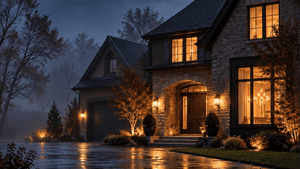
Neither option wins across the board in Temecula Valley. New construction gives you choice of floor plan, newer systems, and a builder process, but a less certain timeline. Pre-owned homes give you a known structure, finished surroundings, and visible resale history. Your timeline, tolerance for construction, and goals decide it.
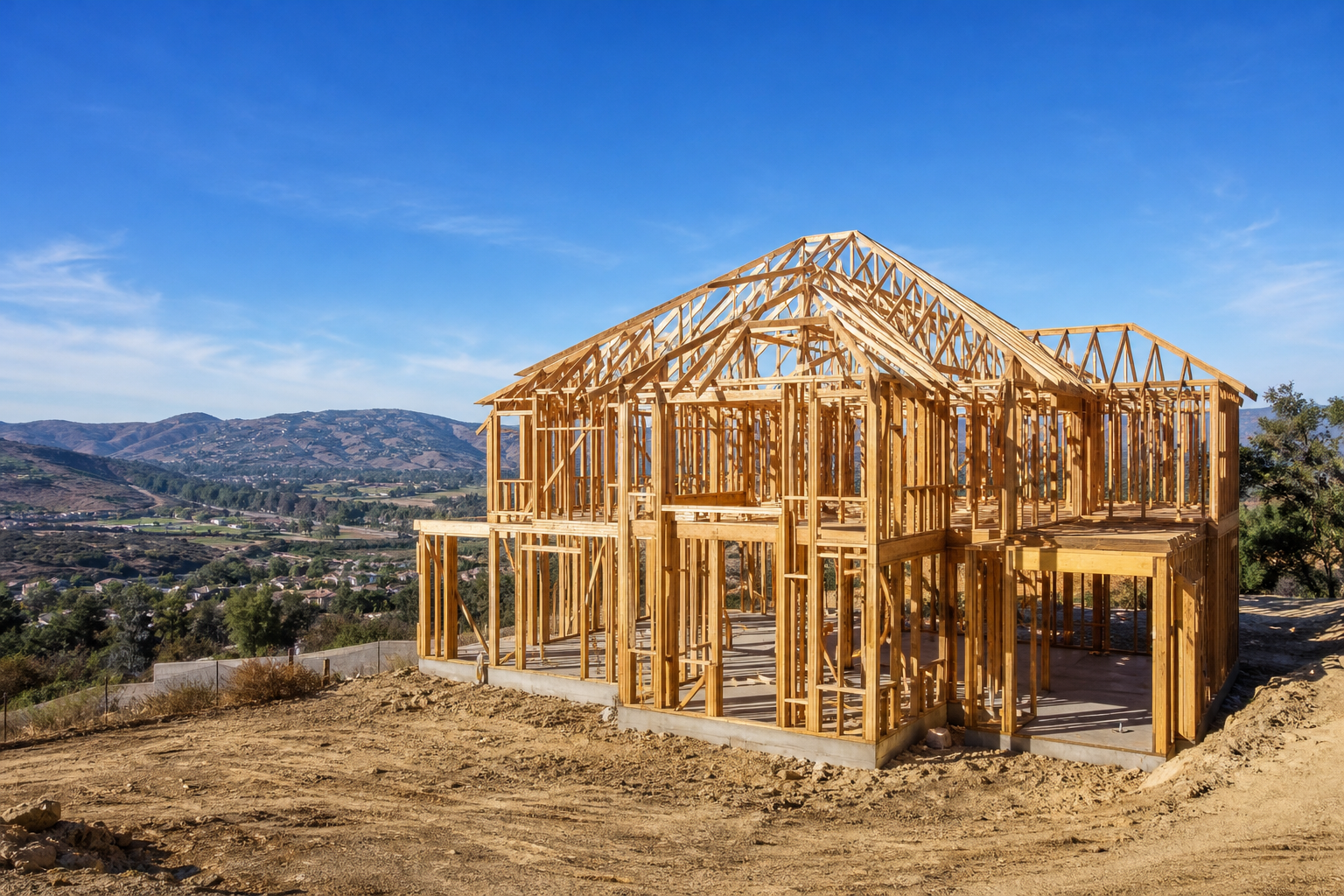
Temecula Valley New Construction vs Pre-Owned Homes
Should you buy new construction or a pre-owned home in Temecula Valley?
It depends on your timeline and how much uncertainty you're comfortable with. In Temecula Valley, new construction offers choice of floor plan, lot, and finishes plus newer systems, but the process involves a builder contract and a completion schedule that can shift. A pre-owned home gives you a structure you can fully inspect, finished surroundings, and nearby resale history to compare against.
Key Takeaways
Recent local market data shows a median sale price of $750,000 in Temecula, with a median of 25 days on market and 508 active listings.
That median blends every property type, so it can't tell you the new-versus-resale price gap on a specific street. That takes a side-by-side comp review.
A home that isn't finished yet carries a longer and less certain timeline than a move-in-ready resale, because completion depends on permits, inspections, and builder scheduling.
"New" does not mean defect-free, and the City's inspection process does not replace your own independent inspection.
Pre-owned homes trade the newest systems for a known, inspectable structure and neighborhoods with finished landscaping and amenities.
I get this question from buyers all over Temecula Valley, and I'd rather give you an honest breakdown of the tradeoffs than a sales pitch for either side. Here's how I walk my clients through the decision, from price and timing to inspections and resale.
How do new construction and pre-owned homes compare in Temecula Valley?
The biggest differences come down to four things: how much you can customize, how certain your timeline is, what you can inspect, and what surrounds the home. Neither side wins every category.
Which gives you more choice, new or pre-owned?
New construction gives you more say in the home itself. Depending on the builder and the stage of the project, you may pick the floor plan, the lot, and the finishes. A pre-owned home is what it is, though you can renovate after closing.
Before you fall for a model home, get the builder's written standard-inclusions list. Then separately identify what is an optional upgrade, including:
Solar arrangements (ownership versus lease or other agreement)
Landscaping and fencing
Window coverings
Appliances
Flooring and finish packages
Those extras are where the real price of a new home gets decided, and they're easy to overlook. If you want a feel for how this plays out in a specific community, my breakdown of Altair at Temecula shows what to look for in a new-home community near Old Town.
How long does each take to close?
A move-in-ready resale is usually the more predictable timeline. New construction can run longer and be less certain when the home isn't finished, because completion depends on permitting, inspections, site conditions, utility work, materials, and builder scheduling.
It helps to know exactly which kind of new-home deal you're looking at:
Completed home, ready for move-in: the closest to a resale in timing.
Home under construction: a target completion date exists, but it can move.
Lot reservation or contract for future construction: the longest and least certain path.
Completed home sold by the builder: still a builder contract, so read it as one.
If you're selling a current home to buy, that uncertainty matters a lot. We'd build your plan around the timeline range, not the brochure date.
What about maintenance and age of systems?
New homes may come with newer building systems and appliances, while pre-owned homes may have older roofs, HVAC equipment, plumbing, windows, or electrical components. Those are property-specific issues, so I look at inspection reports and documented replacement dates rather than guessing at market-wide repair numbers. An older home with a recently replaced roof and HVAC can be a stronger buy than its age suggests.
What does the surrounding neighborhood look like?
Established Temecula and Murrieta neighborhoods may offer completed landscaping, mature trees, existing community services, and visible resale evidence. Newer subdivisions may offer contemporary layouts but can have unfinished surrounding phases, ongoing construction traffic, and amenities that aren't complete yet. Visit at different times of day before you commit. What daily life actually looks like around the home matters as much as the floor plan.
What do Temecula Valley market numbers say?
Recent local market data puts the median sale price in Temecula at $750,000, with a median of 25 days on market, 508 active listings, 162 new listings in the last 30 days, and 360 homes sold over roughly the last 90 days. Those are area-level figures. An individual home's value depends on condition, street, build year, and timing.
Here's how several Temecula Valley areas compare over the same trailing 90-day window:
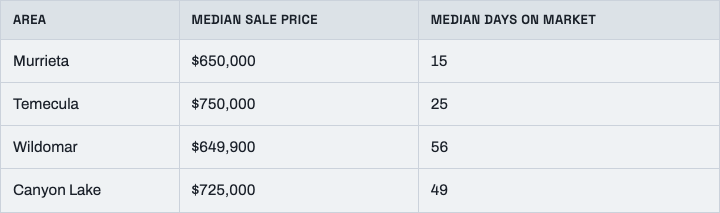
These medians blend new and existing homes of every size, so don't read them as a new-versus-resale price gap. The honest way to answer "is new cheaper?" is to compare the specific new home you're considering against nearby completed resales of similar size, lot, community fees, solar obligations, and upgrades. I run that comparison with my buyers before they write an offer.
I'd also be cautious about two assumptions. A new home doesn't automatically appreciate faster, and an older home doesn't automatically need major repairs. Both outcomes depend on location, condition, lot, construction quality, financing, and market timing. For more on what else can show up in a purchase budget, see my post on the hidden costs of buying in Temecula Valley.
What should you check before buying new construction in Temecula Valley?
Confirm which jurisdiction governs the development, get the builder's contract and inclusions in writing, and plan for your own independent inspections. Don't treat a city sign-off as a substitute for your own review.
Which city or county rules apply?
"Temecula Valley" is used loosely. It commonly includes Temecula and Murrieta and is sometimes stretched to cover Winchester, Menifee, and parts of southwest Riverside County. The City of Temecula's Building & Safety pages apply to properties inside city limits. A development marketed as Temecula Valley may instead sit under Murrieta, Riverside County, or another jurisdiction, with different planning departments, fees, and procedures. Verify the governing jurisdiction for each project before assuming how it was approved.
What does the city's new-home process involve?
Inside the City of Temecula, a new-home project may require review of grading, public access, right-of-way matters, plan checks, fees, and other clearances before permits are issued, as the City explains for building a new home. The City also notes that pre-construction meetings are required at permit issuance for new homes. For new tract and custom homes, building permit submissions are digital, and plan checks, permits, and inspections run through the City's Permit Center under the California Building Code and local regulations.
As a buyer, you don't manage that process, but it explains why timelines move. A resale doesn't have a plan-review-and-permit stage in the same way.
Do you still need your own inspection?
Yes. The City maintains a dedicated inspection process for building and safety work, and new construction may involve multiple inspections before final approval. That is a regulatory approval process. It is not a review done on your behalf. Depending on the builder contract and access rules, you can consider independent inspections at stages such as the foundation, pre-drywall, final completion, and warranty. The exact schedule varies by project, so confirm it with the builder and the governing jurisdiction. Ask what the process looks like for your specific development before you sign.
Read the builder's contract slowly, especially anything about completion dates, substitutions, and warranty procedures. Have your closing agent review how the transaction will close, since builder sales can follow their own paperwork.
Which is the better fit for your goals?
Choose based on your priorities rather than on which label sounds better. I'd frame it like this:
New construction may fit if you value choosing finishes and layout, want newer systems, and can handle a timeline that might shift.
A pre-owned home may fit if you need certainty on timing, want finished landscaping and neighborhood amenities, and prefer to base your decision on nearby resale evidence.
For investors, run the numbers on both. Compare purchase price against completed resales and rental comps for similar homes, and factor in community fees and any solar obligations. Appreciation is never guaranteed on either side.
If you're also weighing a first purchase, my guide to buying your first home in Temecula covers mistakes worth avoiding either way. And if you're looking slightly north, I compared the same question for another city in new construction versus resale in Menifee.
Your specific answer depends on your budget, timeline, and the exact homes in play. That's where a side-by-side comparison with someone who knows this market makes the difference. Our team covers Temecula, Murrieta, Wildomar, Menifee, Lake Elsinore, Canyon Lake, Winchester, and Hemet, so we can compare new communities and established neighborhoods across the valley.
FAQ
Is it cheaper to buy new construction or a pre-owned home in Temecula Valley?
Neither is automatically cheaper. Recent local market data shows a $750,000 median sale price in Temecula, but that blends all property types. The real comparison is a specific new home against nearby completed resales of similar size, lot, fees, and upgrades.
How long does it take to close on new construction in Temecula Valley?
It depends on the stage of the home. A completed, move-in-ready home can be closer to a resale in timing, while a home under construction or a future-construction contract is longer and less certain. Completion depends on permitting, inspections, site conditions, utility work, materials, and builder scheduling, so ask for the builder's schedule in writing.
Are builder incentives better than negotiating on a pre-owned home?
It depends on the builder, the community, and the day you're buying, so compare the full picture rather than the headline offer. Look at the final price, what's included, and the contract terms against what a comparable resale would cost after negotiation. I'll help you line those up before you commit.
What should I inspect before buying a new-construction home in Riverside County?
Plan for your own independent inspections, not just the city's. Depending on the builder contract, consider the foundation, pre-drywall, final-completion, and warranty stages. The city's inspection process is a regulatory approval, and "new" does not mean defect-free.
Ready to compare specific homes?
New construction and pre-owned homes each win in different situations across Temecula Valley. The right call comes from comparing real homes against your timeline and goals, and I'll build that comparison with you so the decision is clear before you tour or write an offer. Schedule a consultation and we'll map out your options.
About Andrew Lewis
Andrew Lewis is a top-producing REALTOR® and founder of Performance Real Estate serving the Temecula Valley and greater Riverside County. Licensed since 2012, he has closed over 500 transactions totaling more than $200 million in sales, specializing in luxury homes, listings, new construction, relocation, and investor-focused real estate.
Real Broker · (951) 237-0292
Equal Housing Opportunity. Andrew Lewis, CA DRE licensed REALTOR®, Performance Real Estate DRE 01914085 / 02022092, Real Broker. Regulated by the California Department of Real Estate. This article is general information, not legal, tax, or financial advice. Confirm your own numbers with your closing agent, tax advisor, or lender.