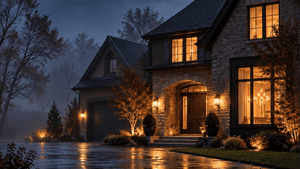
If Temecula brings to mind wineries, master-planned neighborhoods, and suburban streets, De Luz may completely change that picture. This is the rural side of a Temecula address: avocado groves, citrus, vineyards, custom estates, five-acre parcels, winding canyon roads, and homes where the nearest neighbor might be much farther away than the grocery store.
One important distinction: De Luz has a Temecula mailing address, but it is not inside the City of Temecula. It is part of unincorporated Riverside County. That helps explain why living in De Luz feels so different from living in a typical Temecula neighborhood.
Where Is De Luz, California?
De Luz sits west of Temecula in the hills between the city and Fallbrook. The De Luz Community Services District covers approximately 33 square miles of the Santa Rosa Plateau, and the area remains heavily agricultural. Avocados, citrus, and wine grapes are not simply reminders of the past; they still shape the landscape and the way many properties function.
A drive west from Old Town Temecula leads into climbing canyon roads, gates, groves, custom homes, steep hillsides, and ranch roads. Instead of subdivisions, entrance monuments, and rows of matching roofs, there are properties that can feel much farther from town than they actually are. That is the appeal: access to Temecula amenities without the feel of suburban Temecula.
De Luz Acreage: Usable Land Matters More Than Lot Size
De Luz is acreage country, and many properties are five acres or more. Unlike a uniform subdivision, however, the land can vary dramatically from parcel to parcel. One five-acre property may have a large flat pad and usable land; another eight-acre property may be mostly hillside. One may have a working avocado grove, while another has older trees that require substantial investment. A parcel might include a barn, guest house, or exceptional views but also a steep driveway.
For anyone buying acreage in De Luz, total acreage alone is not enough. Consider usable acreage, topography, access, drainage, road condition, water availability, existing plantings, and what it will cost to maintain the land. Above all, determine what the property needs to do: provide privacy, accommodate animals, support a grove, offer space for a shop, or make room for a guest house subject to applicable approvals. In De Luz, the land can be an asset—or a second job.
Avocado Groves, Citrus, and Agricultural Living
The De Luz Community Services District describes the area as primarily agricultural, with substantial acreage devoted to avocados, citrus, and wine grapes. The groves are beautiful, but buying a property with a mature grove may also mean taking on an agricultural operation. Trees need water, pruning, fertilizing, pest management, harvesting, and irrigation. Those costs can be significant.
A useful question for prospective De Luz homebuyers is whether the goal is to own and maintain a grove or simply to enjoy a home surrounded by one. Those are very different lifestyles—and very different budgets.
Roads, Access, and Property Assessments in De Luz
Road maintenance is a defining part of life in De Luz. According to the source material, the De Luz Community Services District oversees a road network of roughly 86 miles and divides the area into five geographical zones. Primary-road maintenance and administrative costs are shared on a per-acre basis across district property owners, while secondary-road costs are allocated within the applicable zone.
Before buying a De Luz property, find out whether access is by a primary road, secondary road, or additional private stretch. Consider the road after heavy rain, steep grades, and access for guests, deliveries, contractors, horse trailers, and emergency vehicles. There are also multiple property-owner associations in different parts of De Luz, so buyers should not assume one HOA, one fee schedule, or one set of rules applies everywhere.
Two homes at the same price and with similar acreage can function completely differently. One may have an easy approach, usable pad, reliable water service, and room to turn vehicles around. Another may have a more attractive kitchen but a difficult driveway, less usable land, and a grove needing work. In this market, the property can matter more than the house.
How Much Do Homes in De Luz Cost?
De Luz real estate is not a market where one median home price tells the whole story. Sales volume is relatively low, and custom homes on acreage vary widely. The source’s 2026 market snapshot described older or smaller acreage homes near the $1 million range, larger custom estates above $2 million, and recent sales spanning roughly $1.5 million to more than $2.2 million. These are historical examples, not current asking prices or guaranteed values.
Vacant land is another market entirely. Parcel pricing depends on acreage, views, location, access, water, building pads, and improvements. De Luz can include a smaller home on acreage, a large custom estate, a working grove, a horse property, or undeveloped land—all under the same neighborhood name. The value lies in the entire parcel, not just the square footage of the home.
Water, Wells, and Irrigation Costs
Water is one of the biggest practical differences between buying a De Luz acreage property and a traditional Temecula tract home. For a property with a grove, it may be one of the first conversations—not an afterthought.
Buyers should determine how a property receives water, review its historical water expenses, understand agricultural usage, confirm whether a well exists and what it produces, and inspect the irrigation system. For vacant land, water availability and connection costs can substantially change development economics. A parcel that appears inexpensive per acre may still be expensive to improve. The land purchase is only the beginning.
Wildfire Exposure and Home Insurance
De Luz is rural hillside country, with vegetation, agricultural land, and challenging terrain. Wildfire planning and homeowners insurance should be part of the purchase decision early—not shortly before closing. Insurability varies by property, and conditions in California’s insurance market can change.
For any De Luz home, obtain insurance quotes early and review the parcel’s fire-hazard designation, defensible space requirements, vegetation management, water supply, access, emergency routes, and any generator or backup systems. A luxury price tag does not make rural-property insurance automatic. Rural luxury still comes with rural responsibilities.
Schools and Everyday Convenience
Many De Luz properties are served by Temecula Valley Unified School District, but a Temecula mailing address does not establish school eligibility. Verify the assignment for each specific property directly with the district.
De Luz residents can still access Temecula shopping, restaurants, Old Town, schools, and freeways. The difference is that nearly everything requires a drive. Depending on how far a home sits within the hills, a quick grocery run may take more planning. The payoff is privacy, views, and room to spread out rather than walkability or immediate freeway access.
De Luz vs. La Cresta: Which Acreage Community Fits Better?
Buyers considering De Luz often also look at La Cresta near Murrieta. La Cresta tends to feel like a more defined rural-estate community, with five-acre minimums, a strong equestrian identity, a property-owners association, and private-road infrastructure. De Luz generally feels more organic and agricultural, with canyon roads, avocado and citrus groves, and greater variation from parcel to parcel.
For buyers prioritizing horses and riding access, La Cresta may be particularly appealing. For those drawn to groves, canyon views, privacy, agriculture, and a tucked-away setting with a Temecula address, De Luz offers a different experience. Neither is universally better; each supports a different version of acreage living.
Who Should Consider Living in De Luz?
De Luz makes the most sense for buyers who actively want rural property—not simply a large house. It may appeal to people seeking privacy, a grove, room for animals, a workshop, guest space, or distance from neighboring homes. It also suits buyers comfortable with property maintenance, driving, and more extensive due diligence than a typical suburban purchase.
It may be a less natural fit for buyers who dislike maintenance, prefer predictable HOA-managed amenities, want walkability, need immediate freeway access, or would rather avoid questions about water systems, septic, wells, road assessments, brush clearance, and insurance. De Luz is not suburban luxury. It is rural acreage living next to Temecula.
Buying a Home or Acreage in De Luz, Temecula
De Luz offers custom homes, groves, vineyards, canyon views, and a level of privacy that is difficult to replicate in a typical Temecula neighborhood. The tradeoffs are just as real: roads, water, maintenance, wildfire planning, insurance, and daily driving. Every property deserves its own evaluation, almost as if it were a neighborhood of its own.
For buyers exploring De Luz homes for sale, vacant land, or luxury acreage in the Temecula Valley, Andrew Lewis of Performance Real Estate Team | Real Broker provides local real estate guidance focused on how a property actually functions—not just how it looks in photos. A property tour can cover the home, access, roads, land, water, and daily commute, helping buyers determine whether the De Luz lifestyle fits their goals.
To discuss buying or selling real estate in De Luz or the surrounding Temecula Valley, contact Andrew Lewis at 951-595-0606 or andrew@performanceREgroup.com. DRE #01914085.
Watch the full guide
📞 Let’s Connect
Website: www.PerformanceREGroup.com
Email: Andrew@PerformanceREGroup.com
Phone: (951) 501-4994
Zoom Consultation: https://tinyurl.com/cvrheu22
Schedule a no-pressure consultation and get clarity on whether Temecula is the right fit for you and your family