A competitive offer in Temecula Valley goes beyond purchase price. Preapproval strength, deposit documentation, contingency timing, closing-date flexibility, and a capped appraisal-gap strategy together signal a credible buyer, without requiring you to overbid or waive protections recklessly.

How do you make a competitive offer in Temecula Valley without overpaying?
Competing in Temecula Valley without overpaying is possible when you understand what sellers actually evaluate beyond the number at the top of the page. Financing certainty, deposit size, contingency timelines, and closing-date fit all factor into a seller's decision, and a buyer who structures those terms well can win against a higher bid while keeping meaningful protections intact.
Key Takeaways
Recent local market data shows the median sale price in Temecula at $742,500 and Murrieta at $669,900, with homes going under contract in roughly 26–28 days, a pace that rewards buyers who arrive with a complete, well-documented offer.
A fully underwritten preapproval, where a lender has reviewed income, assets, credit, and documents before you write an offer, signals far less financing risk to a seller than a basic prequalification letter.
Earnest-money deposits are negotiable contract terms, not a fixed statutory amount; a larger, promptly delivered, documented deposit tells a seller you are serious and financially prepared.
Shortening a contingency period only makes sense when your lender, inspector, and escrow timeline can actually support it, a deadline you cannot meet creates its own risk.
An appraisal-gap commitment should always state a dollar cap, never an open-ended promise; know your verified liquidity before you write that number into an offer.
What does the Temecula Valley market actually look like for buyers right now?
Temecula Valley is a broad geography. When I use the term in this post, I mean the Southwest Riverside County corridor anchored by Temecula and Murrieta, which together account for the bulk of residential activity, along with Winchester, Lake Elsinore, and Canyon Lake. Each city has its own price level and pace, which is exactly why a one-size-fits-all offer strategy fails buyers here.
Recent local market data for the trailing 90 days through September 2026 tells a clear story: this is a market where well-priced homes move quickly, but it is not a market where every listing draws a bidding war. With 510 active listings and 387 homes sold over the same period, buyers have more choices than they did at the peak, and that matters for how aggressively you need to structure an offer.
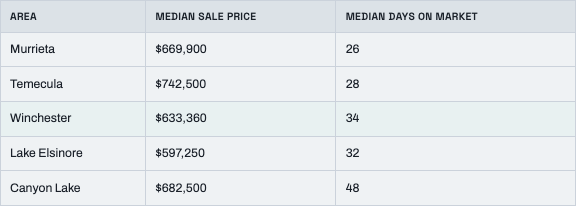
Notice the spread: Canyon Lake homes sit on the market nearly twice as long as Murrieta homes. That difference in pace should directly shape how urgently you act and how many terms you're willing to flex. A home in a competitive Murrieta subdivision with multiple showings on day one calls for a different approach than a Canyon Lake property that's been listed for five weeks.
Before you write a single number, compare the home against recent comparable closed sales in that specific area, not just the asking price. In Temecula and Murrieta especially, condition, solar obligations, HOA costs, lot size, upgrades, and whether a home is in a newer tract or an established neighborhood all move the needle. I walk every buyer I work with through this analysis before we put pen to paper, because knowing the real market value is what keeps you competitive and protected. For a deeper look at how sellers think about pricing, the post on pricing a home to sell in Temecula Valley gives useful context from the other side of the table.
Which offer terms matter most beyond the purchase price?
Price is what gets you in the conversation. Everything else is what wins it, or loses it. Here is how I think through each lever with buyers in this market.
Preapproval strength
A fully underwritten preapproval, where a lender has already reviewed your income, assets, credit, and supporting documents, carries significantly more weight than a basic prequalification. The California Department of Real Estate identifies loan qualification as a core term that belongs in the written offer, and sellers know the difference between a letter that says "you might qualify" and one that says "we've reviewed the file." Your offer should clearly state the proposed loan amount, financing type, down payment percentage, and lender contact information. When a listing agent can call your lender and get a confident answer in two minutes, that matters.
Earnest money deposit
Earnest money deposits are negotiable contract terms, there is no state-mandated percentage. What matters is the amount, the delivery speed, and the documentation. The California DRE's reference book on deposits is clear that the deposit should be documented and paid by check, money order, or cashier's check, not cash, so the transaction record is clean. A larger deposit, delivered promptly into escrow, signals genuine commitment. Your ability to recover the deposit if something goes wrong depends on the purchase agreement, which contingencies are still active, and the circumstances of any cancellation, so never put in more than you understand the risk on.
Contingency timing
Contingency periods are negotiable, and shortening them is one of the most effective ways to strengthen an offer without raising the price. The California DRE identifies inspection, loan, and appraisal contingencies as standard protections buyers should include in their written offer. The key word is shorten, not waive. A tighter inspection window only works if you can get a qualified inspector on-site within two or three days. A compressed loan contingency only works if your lender has a realistic underwriting timeline to match it. I never advise a buyer to agree to a deadline the team can't actually hit, a missed deadline creates its own set of problems.
Closing date and flexibility
Sellers in Temecula Valley are often coordinating a replacement purchase, a school-year move, a relocation, or a rent-back arrangement. Offering a closing date that solves the seller's specific logistical problem can be worth thousands in goodwill, sometimes more than a modest price bump. Before you offer any date, confirm it works with your loan lock period, underwriting timeline, escrow capacity, and moving arrangements. If a seller requests a rent-back or delayed possession, that becomes a separate negotiation with its own terms covering the occupancy period, payment or credit, insurance responsibilities, and what happens if the seller doesn't vacate on time. Your California real estate professional should walk you through every piece of that arrangement before you agree to it.
Seller credits
A seller credit can solve a specific problem, covering financing-related closing costs or agreed repairs, without requiring either party to change the purchase price. Credits are limited by your loan program, lender underwriting, contract terms, and the property's appraised value, so they're not a blank check. Think of a credit as a targeted tool, not a substitute for price negotiation. If you want a deeper look at what credits actually cost buyers at the closing table, the post on hidden costs of buying in Temecula Valley breaks down the full picture.
Appraisal-gap strategy
An appraisal-gap provision tells the seller you'll cover a defined dollar amount above the appraised value if the home doesn't appraise at the contract price. According to the National Association of REALTORS®, a buyer facing a low appraisal generally has three choices: renegotiate the price, bring additional cash to cover some or all of the gap, or terminate if the appraisal contingency still permits it. An appraisal-gap commitment should always state a specific dollar cap, never an open-ended promise. Before you write that number, confirm you have the verified liquid funds to back it up. Offering a $20,000 gap coverage you can't actually fund is worse than not offering it at all.
Buying in Temecula Valley without overpaying means presenting the most credible, lowest-risk package, not the highest number. In a market where homes are selling in roughly 26–28 days at the median, a well-structured offer on a correctly priced home rarely needs to be a reckless one.
What should a complete, competitive offer package include?
Here is the practical checklist I use with buyers before we submit. Every item has a job to do.
A lender letter confirming the buyer has been reviewed for the specific loan amount and purchase price, not a generic "up to $X" letter.
Proof of funds covering the down payment, deposit, closing costs, and any expressly promised appraisal-gap amount.
A deposit amount the buyer can deliver promptly and document through escrow, paid by check or cashier's check, never cash.
Explicit deadlines for deposit delivery, inspections or investigations, appraisal, loan approval, and contingency removal, each one confirmed with your lender and inspector before you write it in.
A closing date chosen after checking lender capacity, underwriting timeline, and escrow availability.
Any seller credit tied to a specific, identified financing or repair need, not a generic ask.
An appraisal-gap cap stated in dollars, backed by verified liquid funds.
Every situation is different, and the only way to know which of these levers actually matters for a specific property is to run the analysis with someone who knows this market. That's the conversation I have with every buyer before we write an offer.
Frequently Asked Questions
How much earnest money makes an offer competitive in Temecula?
There is no fixed statutory amount, earnest money is a negotiated contract term. A larger deposit, delivered quickly and documented through escrow, signals genuine commitment and reduces the seller's perceived risk. What's appropriate depends on the purchase price, the property's activity level, and what competing offers look like; your agent can advise on a realistic range for the specific home you're targeting.
Should I waive the appraisal contingency in a Temecula Valley offer?
Waiving the appraisal contingency outright means you're committing to close at the contract price regardless of what the home appraises for, which is a significant financial risk. A safer approach is an appraisal-gap provision with a defined dollar cap, you cover a stated maximum above appraised value, but you retain the right to renegotiate or walk if the gap exceeds that amount. Only commit to an appraisal waiver or a large gap if you have verified liquid funds and a clear understanding of the comparable sales supporting the price.
Is a fully underwritten preapproval stronger than a standard mortgage preapproval?
Yes, meaningfully so. A fully underwritten preapproval means a lender has already reviewed your income, assets, credit, and supporting documents before you write an offer, the remaining conditions are typically property-related rather than borrower-related. A standard prequalification or basic preapproval letter carries more uncertainty, and sellers (and their agents) know the difference. In a market where homes in Temecula and Murrieta are going under contract in under 30 days, arriving with a stronger lender letter reduces the seller's risk and can tip a close decision in your favor.
Can I shorten the inspection or loan contingency without taking too much risk?
You can shorten either contingency, but only if the supporting timeline is realistic. A tighter inspection window works when you can get a qualified inspector scheduled within two or three days of acceptance. A compressed loan contingency works when your lender has confirmed the underwriting timeline can match it. The California DRE identifies these contingencies as protections that belong in a written offer, shortening them is a competitive tool, but agreeing to a deadline you cannot meet creates its own set of risks.
What happens to my deposit if the appraisal comes in below the offer price?
If your appraisal contingency is still active when a low appraisal comes in, you generally have three options: renegotiate the purchase price, bring additional cash to cover some or all of the gap, or terminate the contract and seek a refund of your deposit. Your ability to recover the deposit depends on the specific terms of your purchase agreement, which contingencies remain active, and the circumstances of any cancellation, this is exactly why the structure of your contingency language matters from the moment you write the offer.
Making a competitive offer in Temecula Valley without overpaying comes down to one thing: presenting the most credible, lowest-risk package for the specific property and seller in front of you. Price is part of that equation, but it's rarely the whole story.
If you're getting ready to write an offer in Murrieta, Temecula, Winchester, or anywhere else in the Valley, I'm happy to walk through the specific terms with you before you submit. Schedule a consultation here and we'll build a strategy around your situation.
About Andrew Lewis
Andrew Lewis is a top-producing REALTOR® and founder of Performance Real Estate serving the Temecula Valley and greater Riverside County. Licensed since 2012, he has closed over 500 transactions totaling more than $200 million in sales, specializing in luxury homes, listings, new construction, relocation, and investor-focused real estate.
Real Broker · (951) 237-0292
Equal Housing Opportunity. Andrew Lewis, CA DRE, Performance Real Estate DRE 01914085 / 02022092, Real Broker, regulated by the California Department of Real Estate. This article is general information only and is not legal, tax, or financial advice; confirm your own numbers with your closing agent, tax advisor, or lender.